Rabbits love to chew, shred, toss, and explore. If your bunny has ever gone after a cardboard box, wooden furniture, or anything else it can reach, that behavior is usually not random. Chewing is a normal part of rabbit life, and providing appropriate gnawing toys for rabbits gives that natural behavior a safer outlet.
The best gnawing toys for rabbits are usually simple products made from rabbit-safe materials such as untreated willow, suitable untreated wood, hay, seagrass, and plain cardboard. However, toys should complement—not replace—a rabbit’s hay-based diet and proper dental care. Rabbits need plenty of hay because continuous chewing and grinding are important for naturally wearing down their continuously growing teeth.
If you’re choosing gnawing toys for rabbits for the first time, focus on safety, variety, and your rabbit’s individual preferences.
Content
Why Do Rabbits Need Gnawing Toys?
Rabbits have an instinctive need to chew. Safe chewing can provide enrichment, occupy your rabbit, and give it an appropriate alternative to furniture, carpets, baseboards, or other household objects.
Good gnawing toys for rabbits can also encourage natural behaviors such as exploring, shredding, tossing, and foraging. Rabbit welfare guidance recommends offering safe opportunities for chewing and foraging as part of a stimulating environment.
However, there is an important distinction: chew toys are not a replacement for hay. Hay should remain a major part of a rabbit’s diet and is particularly important for dental wear and digestive health.
What Are the Best Gnawing Toys for Rabbits?
There is no single perfect toy for every bunny. Some rabbits prefer wood, while others immediately attack cardboard or woven grass. Here are several useful options to consider.
1. Untreated Willow Chew Toys
Willow is one of the most practical choices for gnawing toys for rabbits. You can find willow balls, sticks, rings, baskets, and woven shapes designed for rabbits.
These toys offer a natural texture that many rabbits enjoy. They can also be tossed around before becoming a satisfying chewing project.
Look for products made from untreated, rabbit-safe willow without paint, artificial fragrance, or questionable coatings.
2. Safe Wooden Rabbit Toys
Wooden rabbit toys can provide a firmer chewing texture and are available in many shapes, including blocks, sticks, bridges, and hanging toys.
Untreated rabbit-safe wood is generally preferable. Commercial applewood chew sticks are one example, while randomly collecting branches from outside is less advisable because outdoor wood can contain pesticides, mold, insects, or other contaminants.
When choosing safe gnawing toys for rabbits, always check exactly what type of wood has been used.
3. Hay-Based Chew Toys
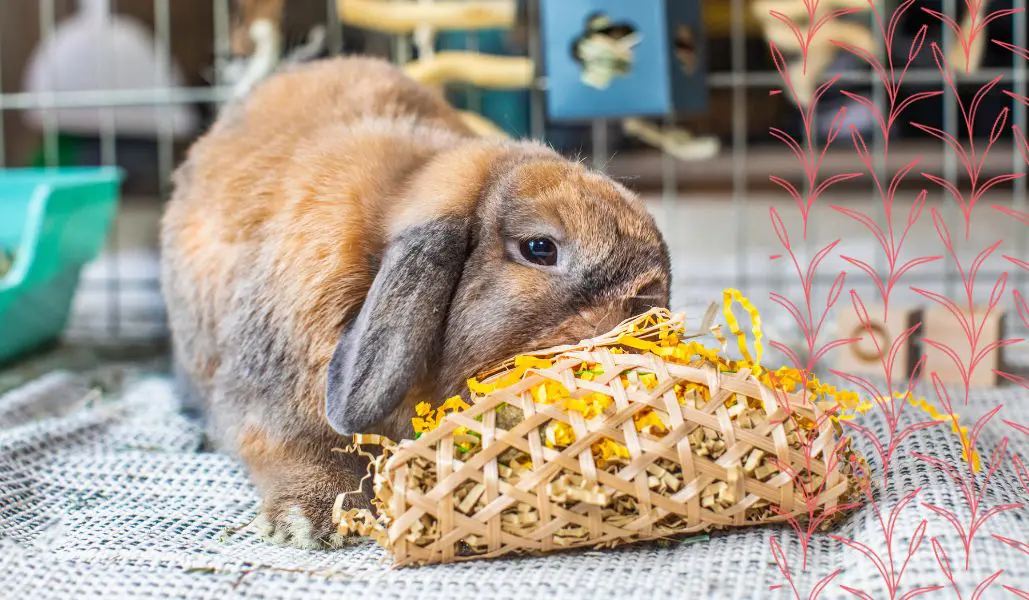
Hay isn’t just food—it can also become enrichment. Hay wreaths, woven hay balls, and other edible grass-based toys can encourage rabbits to chew and forage.
These are especially useful if your rabbit enjoys pulling apart objects to reach food.
Still, remember that a hay toy should supplement the rabbit’s normal supply of fresh, appropriate hay rather than replace it.
4. Plain Cardboard Toys
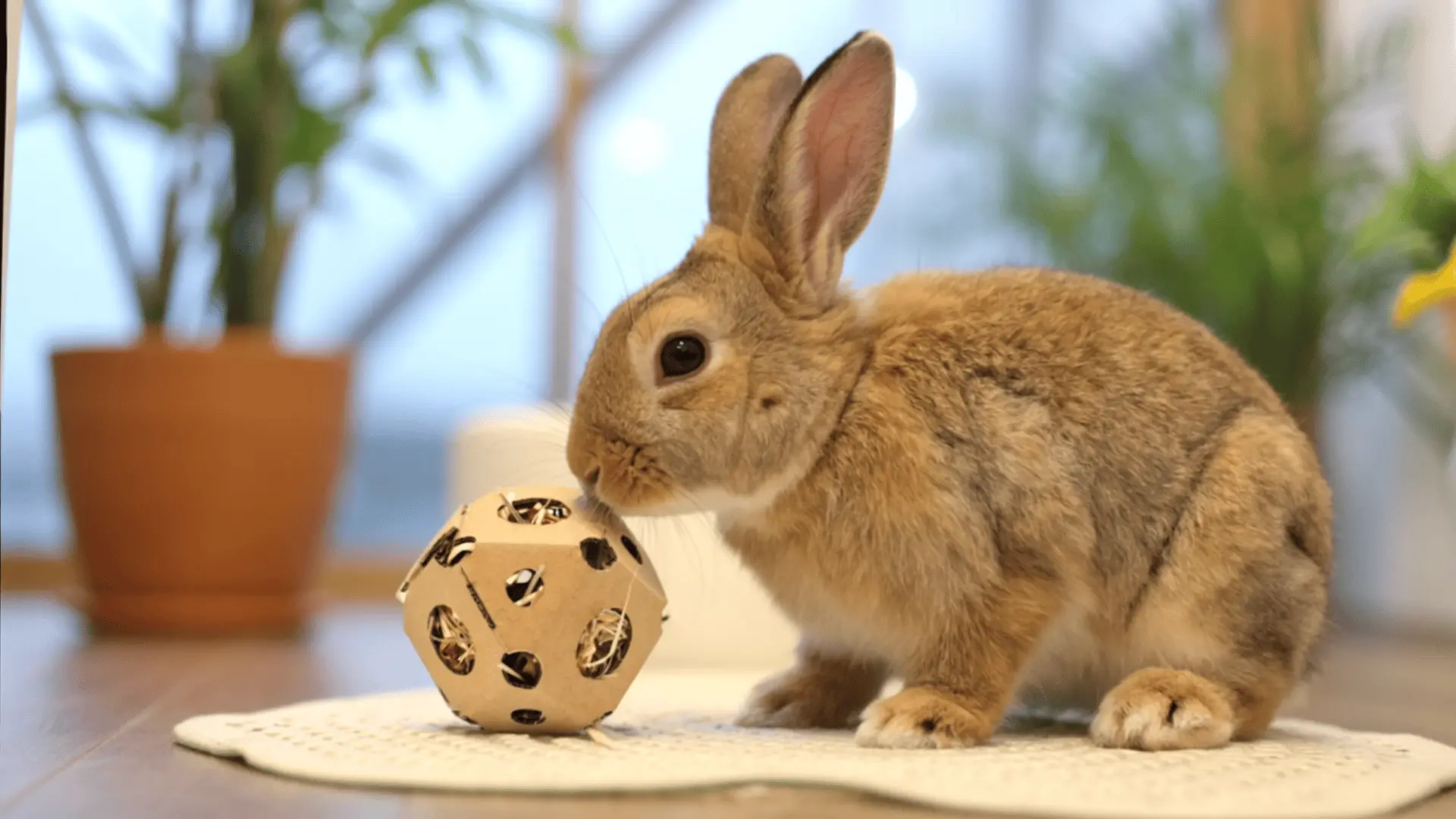
Cardboard is inexpensive and easy to turn into rabbit chew toys. A plain cardboard tube stuffed with hay can become both a chewing activity and a simple foraging puzzle.
Veterinary and rabbit-welfare sources recognize plain cardboard tubes and boxes as useful enrichment materials.
Choose clean cardboard without tape, staples, plastic coatings, or excessive adhesive. If your rabbit starts deliberately eating large quantities instead of simply shredding it, remove the cardboard and consider discussing the behavior with a veterinarian.
5. Seagrass and Natural Woven Toys
Natural seagrass mats, twists, and woven items can combine chewing with digging and shredding.
These natural rabbit toys are particularly useful for rabbits that enjoy working at a surface rather than simply biting a stick. Put a seagrass mat near an area where your rabbit already likes to dig or chew.
6. Foraging and Puzzle Chews
Some of the best gnawing toys for rabbits combine chewing with food discovery.
For example, you can hide a small amount of appropriate food inside a rabbit-safe wooden toy or stuff hay into a plain cardboard tube. This turns chewing into a mental activity rather than simply leaving an object in the enclosure.
Rabbits naturally spend time searching for food, so enrichment that encourages foraging can make toys more interesting.
How to Choose Safe Gnawing Toys for Rabbits
When shopping for gnawing toys for rabbits, don’t choose a product simply because it looks attractive.
Check the material first.
A good toy should:
- Clearly identify its materials.
- Be free from toxic paint and unknown coatings.
- Have no sharp edges.
- Avoid small detachable pieces.
- Have no accessible staples or dangerous metal parts.
- Avoid loose strings and problematic adhesives.
- Be appropriately sized for your rabbit.
- Be designed from materials suitable for chewing.
PetMD specifically warns against painted or stained objects, certain woods, fabric, soft rubber, and toys with pieces that can break off and be swallowed.
If a manufacturer does not clearly explain what a toy is made from, I would skip it. With gnawing toys for rabbits, simplicity is often a better choice than decoration.
What Materials Should Rabbits Avoid?
Not everything sold as a pet toy is automatically suitable for rabbits.
Avoid gnawing toys for rabbits containing:
- Painted or heavily stained wood
- Unknown or chemically treated wood
- Cedar and other unsuitable aromatic woods
- Sharp metal parts
- Loose strings
- Excessive glue
- Small plastic pieces
- Fabric that can be swallowed
- Glossy or heavily treated cardboard
Rabbit Welfare Association & Fund also cautions against accessible staples, tape, string, and unsuitable adhesives because swallowed materials can cause serious gastrointestinal problems.
Outdoor branches should also be treated cautiously. Even if a tree species is potentially safe, branches can have pesticides, mold, insects, or other contaminants. Buying rabbit-specific chewing material from a reputable source is usually the safer approach.
Real-Life Case Study: When Chewing Materials Become Enrichment
Research on rabbit enrichment provides useful real-world evidence for why chewing opportunities matter.
A study summarized by the European Food Safety Authority found that providing rabbits with cardboard and rubber chewing materials increased chewing behavior. Other research discussed in the same review found that access to gnawing materials could contribute to improved welfare indicators in some rabbit housing situations.
This is important because it shows that chewing materials aren’t merely decorative additions to a rabbit’s enclosure. They can encourage natural behavior and provide an activity for rabbits.
For a household rabbit, the practical lesson is simple: instead of waiting for your bunny to choose your furniture as its favorite chewing object, provide several safe alternatives and observe which texture it prefers.
How to Encourage Your Rabbit to Use Chew Toys
Even the best gnawing toys for rabbits may be ignored at first.
Try placing a new toy near your rabbit’s favorite resting or chewing area. You can also make it more interesting by stuffing a plain cardboard tube with hay or placing a safe chew beside a favorite forage area.
I recommend offering two or three different textures rather than filling the enclosure with ten identical toys. One rabbit may love willow, while another may prefer cardboard.
How Often Should Rabbit Chew Toys Be Replaced?
There is no universal replacement schedule for gnawing toys for rabbits.
Inspect them regularly instead.
Replace a toy when it becomes:
- Sharp or splintered
- Extremely small
- Broken into dangerous pieces
- Contaminated with urine or feces
- Difficult to inspect safely
Cardboard should also be removed if it becomes excessively wet, dirty, or heavily consumed.
Remember that some destruction is exactly what you want. A rabbit that has successfully shredded a safe toy has been expressing a natural behavior.
What Toys Do Rabbits Like to Chew?
If you’re wondering what toys do rabbits like to chew, start with variety.
Many rabbits enjoy:
- Willow sticks and balls
- Applewood chews
- Plain cardboard tubes
- Hay-based toys
- Seagrass mats
- Untreated woven toys
- Simple wooden blocks
The important thing is not to assume that every rabbit will love the same thing. Your rabbit’s chewing habits are the best guide.
Final Thoughts
Choosing gnawing toys for rabbits doesn’t have to be complicated. Start with simple, clearly labeled materials such as untreated willow, appropriate untreated wood, hay, seagrass, and plain cardboard. Then watch what your rabbit actually enjoys.
The safest gnawing toys for rabbits are those that encourage natural behavior without introducing unnecessary chemicals, sharp pieces, loose strings, or swallowable components. Give your bunny variety, inspect toys regularly, and always provide plenty of suitable hay.
Looking for the perfect Names for Pet Rabbits? Explore Smart Pets Hub for cute, unique, and creative rabbit name ideas, along with helpful pet care, training, and enrichment guides to help you give your furry companion the best possible life.
FAQs About Gnawing Toys for Rabbits
Are gnawing toys good for rabbits?
Yes. Safe chew toys provide enrichment and an appropriate outlet for natural chewing behavior, but they do not replace hay or veterinary dental care.
What are the best chew toys for rabbits?
Untreated willow, suitable untreated wood, hay-based toys, seagrass, and plain cardboard are useful options when appropriately made and monitored.
Can rabbits chew cardboard?
Yes, plain cardboard can be useful enrichment. Remove tape, staples, excessive glue, and coatings, and monitor rabbits that consume large amounts.
Are wooden rabbit toys safe?
Rabbit-specific toys made from appropriate untreated wood can be safe. Avoid painted, stained, chemically treated, or unknown woods.
Can chew toys replace hay for rabbit teeth?
No. Hay remains essential for a rabbit’s diet, digestion, and natural dental wear.

Patrick Bravo takes readers on a heartwarming journey through the world of pet adoption. He champions shelter animals, shares inspiring rescue stories, and encourages families to open their hearts and homes to pets in need.