Hearing your dog panting when the house is quiet can be worrying, especially when they are supposed to be sleeping. While panting is a normal way for dogs to regulate body temperature, dog panting at night can sometimes point to stress, pain, discomfort, overheating, or an underlying health problem.
The key is to look at the whole picture. Is your dog otherwise relaxed, or are they pacing, whining, coughing, struggling to breathe, or unable to settle? Understanding these differences can help you decide whether your dog simply needs a cooler sleeping environment or should be evaluated by a veterinarian.
Content
Is It Normal for Dogs to Pant at Night?
Occasional panting isn’t necessarily abnormal. Dogs naturally pant after exercise, excitement, warm weather, or stressful experiences. Panting helps them release heat because it is their primary method of cooling themselves.
However, excessive panting in dogs while they are resting deserves more attention. If your dog suddenly starts panting at night when this isn’t normal for them, consider what else has changed.
For example, a dog that pants briefly after playing in the evening and then settles comfortably is very different from one that pants for hours, repeatedly gets up, or appears distressed.
Why Is My Dog Panting at Night?
There isn’t one answer to why is my dog panting at night. Several possibilities can cause this behavior.
1. Your Dog Is Too Warm
Your dog’s sleeping area may simply be warmer than you realize. Thick bedding, poor airflow, warm weather, or a room without adequate ventilation can make a dog uncomfortable.
Offer fresh water and move your dog to a cooler, well-ventilated area. If the panting stops once your dog cools down and relaxes, temperature may have been the simple explanation.
2. Anxiety or Stress
Yes, can anxiety cause dog panting at night? Absolutely. Anxiety can show up as panting, pacing, restlessness, whining, drooling, or difficulty settling.
Nighttime can make anxiety more noticeable because there are fewer distractions. Some dogs become nervous because of thunderstorms, unfamiliar sounds, separation from their owners, changes in the household, or age-related confusion.
If you’re wondering why is my dog panting and restless at night, look for other behavioral clues. A tucked tail, flattened ears, pacing, trembling, or repeatedly seeking your attention may suggest stress rather than simple overheating.
3. Pain or Physical Discomfort
Pain is another important possibility. Dogs may pant excessively even when resting if something hurts.
A dog experiencing discomfort may also:
- Pace or repeatedly change positions
- Whine or whimper
- Limp
- Lick a painful area
- Avoid being touched
- Have trouble sleeping
- Lose interest in food or normal activities
Veterinary guidance identifies excessive panting, restlessness, and changes in sleep among possible signs of pain.
This is especially important if you’re asking can pain cause a dog to pant at night. The answer is yes, and unexplained nighttime panting that persists should not simply be dismissed as a behavioral issue.
4. Age-Related Problems
Why is my old dog panting at night? Older dogs can develop health or behavioral changes that affect nighttime rest.
Senior dogs may experience joint discomfort, anxiety, cognitive changes, or medical conditions that weren’t present when they were younger. Anxiety in older dogs can also be associated with cognitive dysfunction.
If your senior dog’s nighttime routine has suddenly changed, tell your veterinarian what you have noticed rather than assuming it is simply part of getting older.
5. Breathing or Heart Problems
Sometimes panting can be associated with more serious problems involving the heart or respiratory system. Heavy panting accompanied by coughing, breathing difficulty, weakness, or an inability to settle is more concerning than occasional panting after activity.
This is one reason abnormal panting in dogs should be assessed in context rather than treated as a single symptom.
6. Recent Exercise or Excitement
A dog that has spent the evening running, playing fetch, or getting overly excited may continue panting for a while afterward.
Give them an opportunity to rest in a comfortable environment with access to water. The panting should gradually settle as they recover.
Why Is My Dog Panting at Night but Not During the Day?
This is a common concern. If your dog behaves normally throughout the day but consistently pants at night, think about what is different after bedtime.
Ask yourself:
- Is the bedroom warmer?
- Has your dog’s sleeping location changed?
- Are there unusual nighttime noises?
- Does your dog sleep alone?
- Has your dog recently started a medication?
- Does your dog seem painful when getting into bed?
- Is the behavior happening every night?
Keeping a simple record of when the panting begins, how long it lasts, and what other behaviors occur can give your veterinarian useful information.
When Should I Worry About My Dog Panting at Night?
When should I worry about my dog panting at night? Pay particular attention when panting is sudden, severe, persistent, or accompanied by other unusual symptoms.
Seek prompt veterinary advice if your dog has nighttime panting along with:
- Difficulty breathing
- Persistent coughing
- Extreme weakness or collapse
- Pale, white, blue, or gray-looking gums
- Repeated vomiting
- Severe restlessness
- A swollen or painful abdomen
- Signs of overheating
- Suspected poisoning
- Seizures or significant confusion
Blue or pale gums can indicate inadequate oxygenation and require immediate veterinary attention.
If your dog appears to be struggling to breathe rather than simply panting, don’t wait to see whether the problem disappears on its own.
How to Stop a Dog From Panting at Night
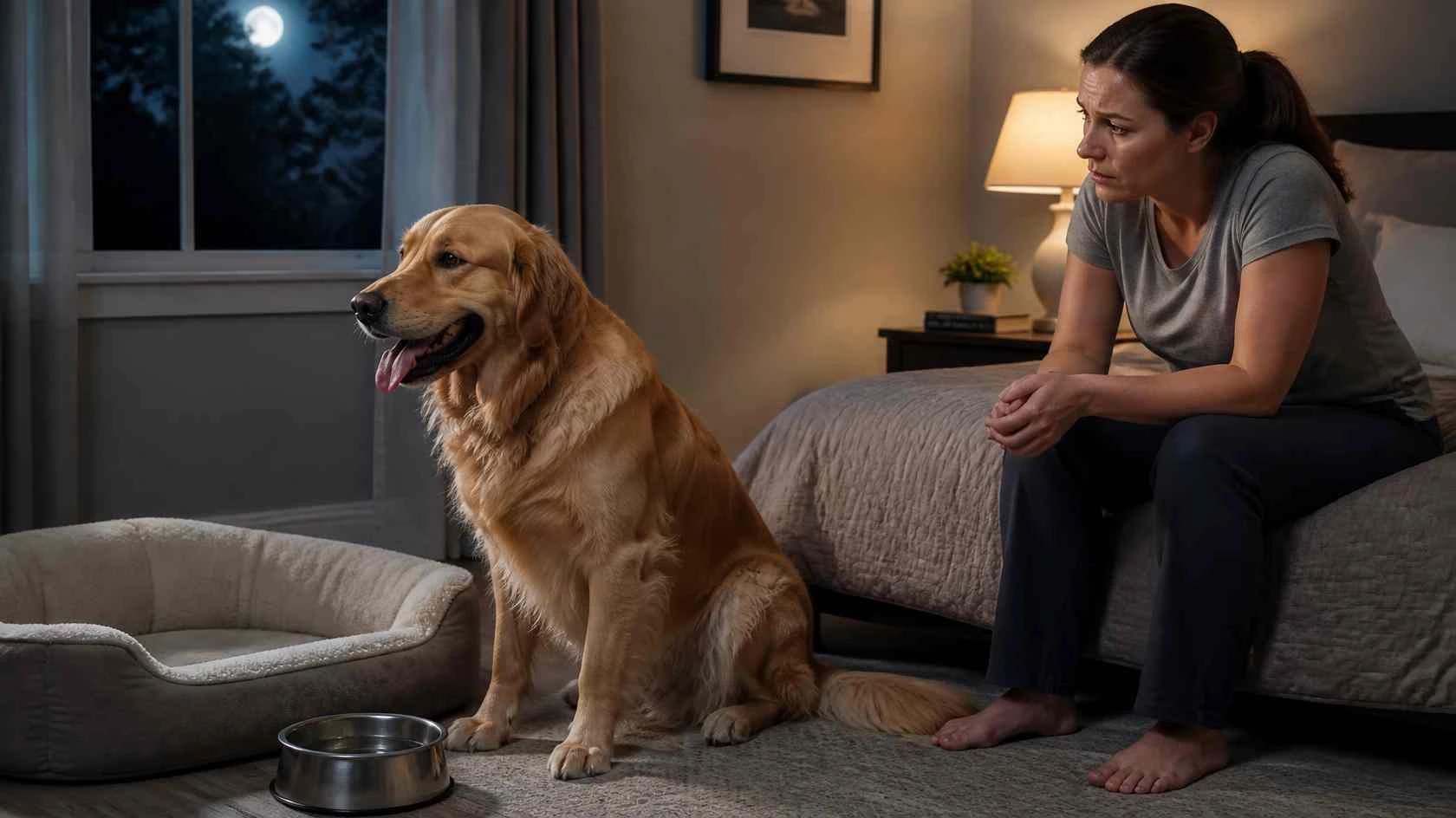
The answer to how to stop a dog from panting at night depends on the cause. You shouldn’t try to suppress panting without understanding why it is happening.
For mild, situational panting, you can:
- Move your dog to a cooler, comfortable room.
- Make sure clean drinking water is available.
- Remove unnecessary sources of noise or stress.
- Keep the bedtime routine predictable.
- Give your dog a comfortable sleeping area.
- Avoid vigorous exercise immediately before bedtime.
- Observe your dog’s breathing and behavior.
If anxiety appears to be involved, calmly reassuring your dog and reducing the source of stress may help. However, recurring anxiety or nighttime panting deserves discussion with a veterinarian rather than being treated solely at home.
Most importantly, never give your dog human painkillers or other medication simply because you suspect discomfort.
Real-World Veterinary Example: Why Context Matters
A useful real-world lesson from veterinary guidance is that panting becomes much more meaningful when it occurs alongside other symptoms.
For example, veterinary experts note that a dog experiencing pain may pant while resting and simultaneously show restlessness, changes in sleep, reduced activity, or reluctance to be touched.
That distinction is important for owners. A dog panting briefly after a warm evening walk is not necessarily experiencing the same problem as a dog that suddenly begins panting at midnight, repeatedly changes positions, and cannot get comfortable.
Rather than focusing only on the panting itself, consider the timing, duration, environment, and accompanying behavior. This approach gives your veterinarian a much clearer picture of what may be happening.
Final Thoughts
If you’ve been wondering why is my dog panting at night, don’t assume the answer is always anxiety or simply being too warm. Panting is normal in many situations, but a new or persistent change deserves attention.
Start by checking your dog’s environment and observing their behavior. If nighttime panting continues, becomes intense, or appears alongside breathing difficulties, pain, weakness, coughing, or other concerning symptoms, contact a veterinarian.
As a dog owner, one of the most useful habits you can develop is learning what is normal for your individual dog. When their nighttime behavior suddenly changes, that difference itself can be an important clue
Explore Smart Pets Hub’s guide on Why Is My Dog Panting at Night, with helpful pet care tips, dog behavior advice, training guides, and more.
FAQs About Why Is My Dog Panting at Night
Is it normal for dogs to pant at night?
Occasional panting can be normal, particularly after exercise, excitement, stress, or warmth. Persistent resting panting deserves closer attention.
Why is my dog suddenly panting at night?
Sudden nighttime panting can result from heat, anxiety, pain, medication effects, or an underlying medical problem. Look for additional symptoms.
Why is my dog panting heavily at night?
Heavy panting may occur because of overheating, stress, pain, or respiratory and heart problems. Severe or unusual panting should be evaluated.
Can anxiety cause dogs to pant at night?
Yes. Anxiety may cause panting along with pacing, restlessness, trembling, whining, or difficulty settling.
Can pain cause a dog to pant at night?
Yes. Dogs in pain may pant while resting and may also pace, struggle to sleep, change positions frequently, or behave differently.

Patrick Bravo takes readers on a heartwarming journey through the world of pet adoption. He champions shelter animals, shares inspiring rescue stories, and encourages families to open their hearts and homes to pets in need.