Seeing small red bumps, pimples, or blackheads on your dog’s chin can be surprising. Dog acne is a real skin condition that commonly affects the muzzle and lips, and mild cases may look like ordinary pimples. However, irritated or severe lesions can become infected and may cause swelling, bleeding, or scarring.
If you have noticed facial bumps and wondered, “why does my dog have pimples?”, understanding the cause is the first step toward appropriate care.
Content
What Is Dog Acne?
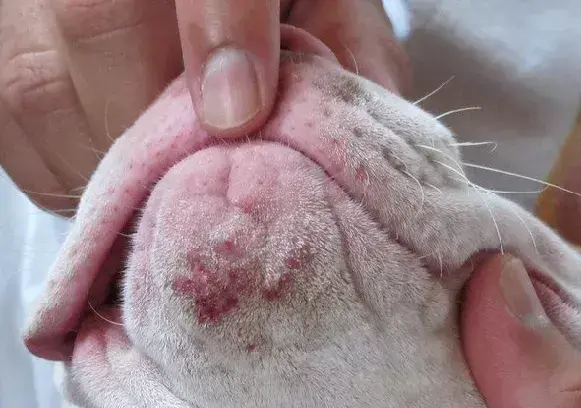
Dog acne is an inflammatory skin condition that commonly affects the lips, chin, and muzzle. It can cause red bumps, pustules, blackheads, swelling, and irritated hair follicles.
Unlike human acne, the exact cause is not always clear. Genetics may play a role, while trauma to the chin or muzzle can contribute to inflammation around hair follicles. Bacteria can also colonize damaged skin and lead to infection.
So, what does dog acne look like? In mild cases, you may see a few small red bumps or pimples. More serious cases can involve pus-filled lesions, crusting, swelling, or bleeding.
What Causes Dog Acne?
Several factors can contribute to dog acne. Knowing these causes can help you recognize possible triggers and discuss them with your veterinarian.
1. Blocked Hair Follicles
Oil, dead skin cells, and other material can accumulate around hair follicles. When follicles become blocked or inflamed, bumps and pustules may develop.
2. Trauma and Irritation
Rubbing the muzzle against rough surfaces, scratching, licking, or digging with the face can damage hair follicles. Veterinary sources identify trauma to the chin and muzzle as an important contributor to canine acne.
3. Bacteria
Damaged skin can become colonized by bacteria. This is one reason some dogs develop more painful or inflamed lesions.
4. Allergies
Food or environmental allergies may contribute to skin inflammation in some dogs. This is why dog acne vs allergies can sometimes be difficult to distinguish without a veterinary examination.
5. Genetics
Some breeds appear more predisposed to canine acne than others. Boxers, bulldogs, Great Danes, mastiffs, Rottweilers, Doberman pinschers, and several other breeds are commonly reported among affected dogs.
What Does Dog Acne Look Like?
The appearance can vary depending on the severity. Common signs include:
- Small red bumps
- Pimples or pustules
- Blackheads
- Swollen skin around the chin or lips
- Crusts or scabs
- Pus
- Bleeding lesions
- Rubbing or scratching at the face
If you notice several of these signs together, especially swelling or discharge, your dog may need professional assessment. Severe canine acne can sometimes result in permanent scarring if it is not properly managed.
Why Does My Dog Have Bumps on His Chin?
The chin is a common location because the skin and hair follicles in this area can experience repeated contact with food bowls, dirt, rough surfaces, or other irritants.
For example, imagine a young Boxer that frequently pushes its muzzle into the ground while playing. Repeated friction can irritate the follicles. A few days later, the owner may notice several small bumps under the chin.
This does not automatically mean the dog has an infection. Other conditions, including parasites, allergies, follicular disorders, and bacterial skin problems, can produce similar-looking lesions. A veterinarian may use skin tests or other diagnostics when the appearance is unclear.
How to Treat Dog Acne
The right dog acne treatment options depend on the severity and whether infection or another skin condition is involved.
For mild cases, veterinarians may recommend topical treatment. Benzoyl peroxide is commonly used in veterinary medicine because it helps flush hair follicles and reduce bacterial contamination. Veterinary formulations are preferred because benzoyl peroxide can be very drying.
More severe cases may require additional treatment. Depending on the examination, a veterinarian may prescribe topical or oral medications, antibiotics for bacterial infection, or anti-inflammatory treatment.
Do not automatically use a human acne cream on your dog. Products designed for people may contain ingredients or concentrations that are unsuitable for pets. Always ask your veterinarian before applying medication to facial lesions.
Can You Treat Dog Acne at Home?
Some supportive care can help, but home treatment should not replace veterinary advice when lesions are severe or persistent.
One of the most important rules is never squeeze the pimples. Pressing or popping them can cause additional follicular damage and increase inflammation.
You can also:
- Keep bedding clean.
- Wash food and water bowls regularly.
- Reduce contact with rough or dirty surfaces.
- Keep the facial area clean as directed by your veterinarian.
- Watch for scratching, licking, or rubbing.
- Monitor whether symptoms appear alongside allergy signs.
If your veterinarian recommends a medicated cleanser, follow the instructions carefully. Some topical products can cause excessive dryness or irritation if used incorrectly.
How to Prevent Dog Acne
Preventing dog acne is largely about reducing irritation and identifying factors that repeatedly trigger inflammation.
If your dog eats from a bowl with rough or damaged edges, replacing it may reduce facial friction. Regular cleaning can also help keep the feeding area hygienic.
Pay attention to your dog’s habits, too. A dog that constantly rubs its face against carpets, soil, furniture, or other surfaces may repeatedly traumatize the skin.
If acne keeps returning, your veterinarian may investigate allergies, parasites, bacterial infection, or another underlying skin problem rather than simply treating the visible bumps.
Real-Life Case Study: When Simple Facial Bumps Needed Attention
Consider a common scenario: a young, short-haired dog develops several red bumps around the chin. At first, the owner assumes they are harmless pimples and leaves them alone. Over the following days, the dog begins rubbing its muzzle against the floor, and some bumps become swollen.
At the veterinary visit, the appearance suggests canine acne, but the veterinarian also considers possible infection and other skin conditions. Instead of squeezing the lesions at home, the owner follows a veterinary treatment plan and removes potential sources of facial irritation.
The important lesson is not that every facial bump requires extensive treatment. It is that persistent or worsening skin lesions deserve an accurate diagnosis. Similar-looking conditions can have different causes, so treating the wrong problem may delay improvement.
When Should I See a Vet for Dog Acne?
A veterinary examination is especially important if your dog’s facial bumps:
- Keep getting worse
- Become painful or significantly swollen
- Produce pus
- Bleed
- Develop thick crusts
- Spread to other areas
- Keep returning
- Cause persistent scratching or rubbing
A veterinarian may diagnose typical cases from their appearance, but additional tests such as skin cytology, cultures, skin scrapings, or biopsy may sometimes be needed to rule out infection, parasites, or other skin disorders.
Final Thoughts
Dog acne can look alarming, but many cases are manageable with appropriate care. The key is to avoid squeezing the lesions, reduce sources of irritation, and watch for signs of infection or worsening inflammation.
If your dog’s chin suddenly develops persistent bumps, swelling, pus, or bleeding, professional evaluation is the safest approach. With the right diagnosis and treatment, most owners can help their dogs get back to comfortable, healthy-looking skin.
Frequently Asked Questions
Is Dog Acne Common?
Yes. Canine acne is a recognized inflammatory condition, particularly around the lips and muzzle, although not every facial bump is necessarily acne.
Can Puppies Get Acne?
Yes. Young dogs can develop acne, and some breeds appear genetically predisposed to it.
Can Dog Acne Go Away on Its Own?
Mild cases may improve, but persistent or worsening lesions should be evaluated rather than assumed to be harmless.
How Long Does Dog Acne Last?
The duration varies according to the underlying cause and severity. Some cases improve with appropriate topical care, while recurrent or infected cases may need longer treatment.
How Do You Treat Acne on a Dog’s Chin?
Treatment depends on the cause. A veterinarian may recommend appropriate topical therapy and address infection, irritation, allergies, or other contributing conditions.

Patrick Bravo takes readers on a heartwarming journey through the world of pet adoption. He champions shelter animals, shares inspiring rescue stories, and encourages families to open their hearts and homes to pets in need.