If your dog suddenly starts scratching its ears, shaking its head, or developing dark ear discharge, an ear problem may be the reason. One possible cause is Ear Mites in Dogs, tiny parasites that live mainly in the external ear canal and can cause significant irritation.
Ear mites are called Otodectes cynotis. They are more commonly associated with cats, but dogs can also become infested, particularly after close contact with an affected animal. Because several other conditions can cause similar symptoms, identifying the actual cause is important before starting treatment.
Content
What Are Ear Mites in Dogs?
Ear Mites in Dogs are caused by microscopic parasites known as Otodectes cynotis. These mites live on the surface of the external ear canal rather than burrowing deeply into the skin. Their activity can trigger inflammation, itching, and increased ear debris.
Unlike some other types of mites, ear mites primarily affect the ears. However, they can occasionally be found on nearby areas of the body. Dogs may react strongly to the irritation, especially when an infestation becomes established.
Knowing what are ear mites in dogs is useful because ordinary ear irritation does not always mean mites are present. Yeast infections, bacterial infections, allergies, foreign objects, and other problems can also cause itchy or inflamed ears.
What Are the Signs of Ear Mites in Dogs?
The ear mites in dogs symptoms can vary from mild irritation to severe inflammation. Common signs include:
- Frequent ear scratching
- Repeated head shaking
- Red or irritated ear canals
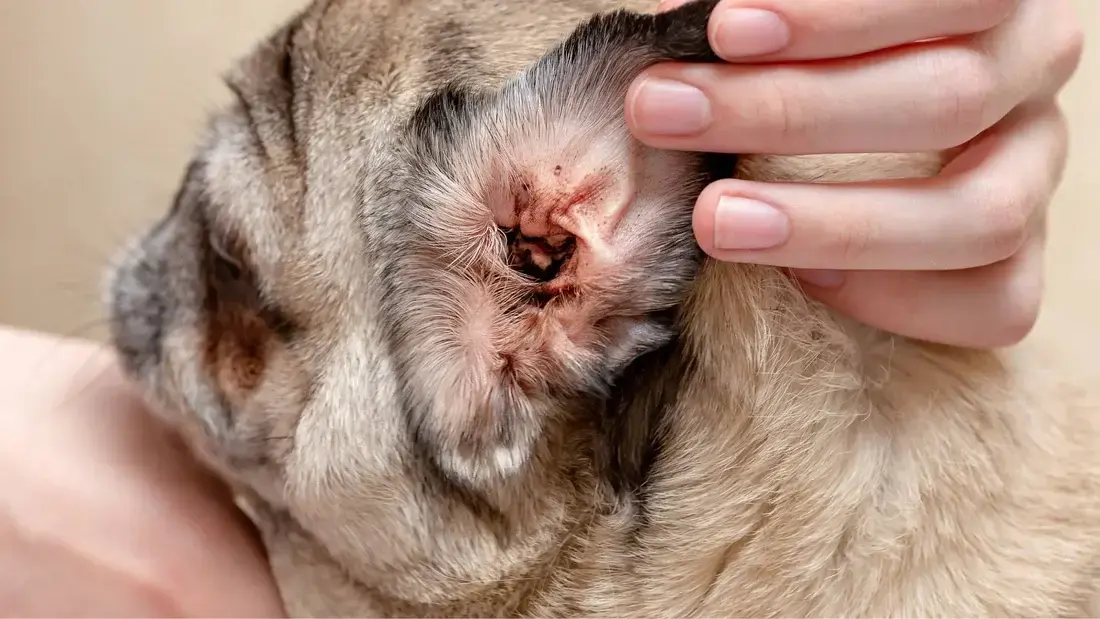
- Dark brown or black ear debris
- Unpleasant ear odor
- Sensitivity when the ears are touched
- Rubbing the ears against furniture or the floor
- Crusting around the ear
- Drooping of an ear in some affected dogs
These are common signs of ear mites in dogs, but they are not exclusive to mites. For example, allergies can also cause red, itchy ears and may contribute to secondary bacterial or yeast infections.
What Do Ear Mites Look Like in Dogs?
If you’re wondering what do ear mites look like in dogs, the answer may be surprising: most owners will not easily see them with the naked eye.
The mites are very small, and veterinarians may use an otoscope or examine ear debris under a microscope to identify them. A dark, crumbly buildup in the ear can be a useful clue, but the debris itself is not proof that mites are present.
That distinction matters. Trying to diagnose the problem based only on earwax can lead to the wrong treatment.
How Do Dogs Get Ear Mites?
So, how dogs get ear mites is an important question for owners with more than one pet.
Transmission generally occurs through close contact with an infected animal. Dogs can encounter the mites when interacting with other dogs, cats, or susceptible animals carrying the parasite. Younger animals can be particularly affected.
If one pet in a household is diagnosed, ask your veterinarian whether other animals should also be examined or treated. Treating only one affected animal may allow the infestation to continue circulating.
This is especially important in homes with several pets that sleep together, groom each other, or spend a lot of time in close contact.
How Are Ear Mites Diagnosed?
A veterinarian can usually investigate the ears and determine whether mites are present. Examination may involve looking inside the ear and checking ear discharge or debris under magnification.
Veterinary diagnosis is valuable because an ear infection can look similar to an infestation. Merck Veterinary Manual notes that diagnosis of ear mite problems can involve physical examination and examination of material from the affected area.
In some dogs, mites may also occur alongside bacterial or yeast infections. A published case report involving four imported puppies found Otodectes cynotis together with bacterial and yeast infections, demonstrating why a complete examination can be important.
How Can You Treat Ear Mites in Dogs?
The appropriate ear mites treatment depends on the dog’s condition and the products approved for use in your location.
Veterinarians may recommend an appropriate parasiticide designed to kill mites. Ear cleaning may also form part of the treatment plan when excessive wax and debris are present. Merck Veterinary Manual recommends veterinary-directed treatment and ear-cleaning instructions for affected dogs.
Some approved parasite-control products can also treat ear mite infestations. For example, the Australian NexGard product information states that NexGard treats and controls ear mite (Otodectes cynotis) infestations in dogs, while its product information advises veterinary consultation if ear irritation persists.
However, medication should be selected according to the dog’s age, weight, health status, diagnosis, and local product label. Don’t use a household remedy or another pet’s medication simply because it worked for them.
What About Cleaning Your Dog’s Ears?
Dog ear cleaning can help remove accumulated material, but it should be done carefully.
If the ear is painful, badly inflamed, bleeding, or producing significant discharge, have a veterinarian examine it before attempting aggressive cleaning. Merck specifically cautions against irritating home remedies such as vinegar mixtures because inflamed ears can become worse.
A veterinarian can show you which ear-cleaning product and technique are appropriate for your dog.
Can Ear Mites Spread Between Dogs and Cats?
Yes. Ear mites can affect both dogs and cats, and close contact can facilitate transmission. This means owners should not focus only on the dog showing symptoms.
If your dog lives with cats or other pets, tell your veterinarian about the entire household. The veterinary team can determine whether contact animals need examination or treatment.
This is one reason parasite control works best as a household-management issue rather than simply treating the most visibly itchy pet.
Real-Life Case Study: Four Puppies With Ear Mites
A published veterinary case report provides a useful example of how Ear Mites in Dogs can present in real life.
Researchers reported four puppies—a Siberian Husky, Cocker Spaniel, Terrier, and mixed Pekinese—that had recently been imported from Thailand and were examined at the Small Animal Hospital of the University of Tehran. All four had excessive dark-brown discharge in both ears. Veterinary examination revealed moving white mites, and laboratory identification confirmed Otodectes cynotis. The puppies also had concurrent yeast and bacterial infections.
The dogs received veterinary treatment involving ear cleaning and prescribed topical therapies. At the one-month reevaluation, no mites were detected through otoscopic and microscopic examination.
The case illustrates an important practical lesson: dark ear discharge can be a clue, but veterinary examination can reveal the actual cause and identify additional infections that may need attention.
How Can You Prevent Ear Mites?
Preventing Ear Mites in Dogs starts with sensible parasite management and regular observation.
Consider these habits:
- Check your dog’s ears regularly.
- Pay attention to sudden scratching or head shaking.
- Keep up with veterinarian-recommended parasite prevention.
- Have new or recently adopted pets examined when appropriate.
- Ask your veterinarian about other pets after a mite diagnosis.
- Avoid sharing medications between animals.
- Seek professional advice when ear irritation continues.
Regular checks are particularly useful because small changes can be easier to manage before the ear becomes severely inflamed.
When Should You See a Vet for Dog Ear Mites?
You should know when to see a vet for dog ear mites, especially if your pet appears painful or the problem is persistent. Arrange a veterinary examination if your dog has severe scratching, ear swelling, bleeding, strong odor, unusual discharge, or ongoing head shaking.
Pet owners may also notice other unusual behaviors and wonder, Why Is My Dog Panting at Night Nighttime panting is not a typical defining sign of ear mites, so it should not automatically be blamed on an ear mite infestation. Panting can have several causes, and persistent or unexplained nighttime panting deserves discussion with a veterinarian, particularly if it occurs alongside pain, restlessness, coughing, weakness, or other changes in behavior.
Final Verdict
Ear Mites in Dogs are caused by tiny parasites that can produce intense itching, head shaking, inflammation, and dark ear debris. Although these signs can strongly suggest an ear problem, they do not automatically confirm mites.
The safest approach is to have the condition properly identified and then follow a veterinarian-recommended treatment plan. In multi-pet households, discussing the other animals with your veterinarian is also important because ear mites can spread through close contact.
With appropriate diagnosis, treatment, ear care, and parasite prevention, most dogs can return to comfortable, healthy ears.
Frequently Asked Quesitons
Can ear mites in dogs affect humans?
Human infestations are uncommon, but temporary skin irritation can occur after close contact with an infected pet.
How long do ear mites survive off a dog?
Ear mites generally survive poorly away from a host, making direct animal-to-animal contact the main transmission route.
Can ear mites cause hearing problems in dogs?
Severe ear inflammation may interfere with hearing temporarily, especially when the ear canal becomes blocked by debris.
Are ear mites common in puppies?
Yes. Puppies can develop ear mites, particularly through close contact with infected animals.

Patrick Bravo takes readers on a heartwarming journey through the world of pet adoption. He champions shelter animals, shares inspiring rescue stories, and encourages families to open their hearts and homes to pets in need.