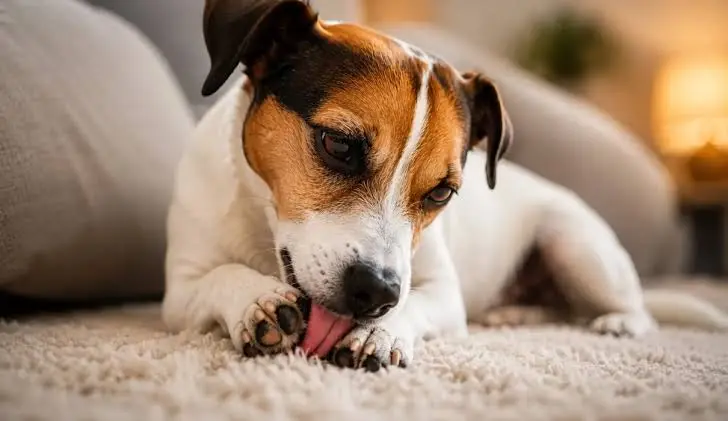
If you have ever noticed your dog repeatedly licking its feet, you may wonder, why do dogs lick their paws? Occasional paw licking is often a normal grooming habit. Dogs may clean their feet after walking outside, remove dirt, or lick a damp paw. However, frequent licking can sometimes point to itching, allergies, irritation, injury, pain, or stress.
The important thing is to notice how often your dog does it and whether other symptoms appear. Redness, swelling, odor, sores, hair loss, or limping can suggest that something more than simple grooming is happening. Understanding the possible causes can help you decide when observation is enough and when professional veterinary advice is appropriate.
Content
Is It Normal for Dogs to Lick Their Paws?
Yes, occasional licking can be normal. Dogs naturally groom themselves, and their paws can collect dirt, moisture, grass, and other outdoor debris.
The key is moderation. If your dog briefly licks its paws after a walk and then returns to normal activities, there may be little reason for concern. But if you notice excessive paw licking in dogs, especially when it happens every day or for long periods, it is worth investigating.
A useful question is: Is it normal for dogs to lick their paws when there are no other symptoms? In many cases, occasional licking is simply part of normal grooming.
Why Do Dogs Lick Their Paws?
There is no single answer to why do dogs lick their paws because several physical and behavioral factors can cause the habit.
1. Natural Grooming
One of the simplest reasons is grooming. Your dog may lick its paws after coming indoors, particularly when the feet are dirty or wet.
This type of dog licking paws is generally brief and does not usually cause redness, wounds, or hair loss. If your dog licks once or twice and moves on, there may not be a problem.
2. Allergies and Itchy Skin
Allergies are another common reason for itchy paws in dogs. Dogs can react to environmental substances such as grass, pollen, mold, or certain insects. Food allergies can also contribute to skin irritation in some dogs.
When paws become itchy, licking may temporarily soothe the discomfort. Unfortunately, repeated licking can make the skin more irritated, creating a cycle of itching and licking. Veterinary guidance also identifies allergies and environmental irritants as possible causes of persistent paw licking.
This is why can allergies cause dogs to lick their paws is an important question for owners dealing with recurring symptoms.
3. Irritated or Dry Paws
Hot pavement, rough surfaces, chemicals, salt, dirt, or other outdoor substances can irritate the paw pads. Dry skin may also make the feet uncomfortable.
Look closely at the pads after walks. Irritated dog paws may appear red, cracked, unusually dry, or sensitive.
Rinsing and gently drying your dog’s feet after outdoor activities can help remove potential irritants. However, persistent irritation should be discussed with a veterinarian.
4. Cuts, Scrapes, or Foreign Objects
A small cut, thorn, splinter, piece of glass, or other debris can cause a dog to focus on one paw. Dogs often lick an uncomfortable area because they instinctively try to clean it.
If your dog suddenly starts licking one foot much more than the others, inspect it carefully if your dog allows handling.
Avoid forcing the examination if your dog appears painful or frightened. A deeper wound or embedded foreign object may require professional treatment. Paw injuries are specifically identified as another potential cause of licking.
5. Pain or Swelling
Sometimes why do dogs lick their paws has an answer that is not visible on the surface. A dog may lick a paw because of an injury involving muscles, joints, bones, or deeper tissues.
Watch for additional signs such as:
- Limping
- Holding one paw off the ground
- Reluctance to walk
- Swelling
- Sensitivity when touched
- Suddenly avoiding stairs or jumping
If your dog keeps licking one paw and is also limping, veterinary evaluation is sensible. Some injuries are not obvious simply by looking at the paw.
6. Anxiety, Stress, or Boredom
Not every case involves a physical problem. Some dogs lick their paws as a repetitive coping behavior when they are anxious or stressed. Changes in routine, separation, thunderstorms, fireworks, or other stressful situations may trigger repetitive behaviors. The reference veterinary article also notes that anxious dogs may show other behavioral changes alongside paw licking.
For example, Why Does My Dog Sleep Between My Legs is another behavior owners may notice when their dog seeks comfort, warmth, or a sense of security. If paw licking or other unusual behaviors appear during stressful situations, consider what happens immediately before the behavior begins. Looking at the overall pattern can help you understand whether your dog may be responding to anxiety, boredom, or a change in its environment.
7. Infection or Ongoing Skin Problems
Constant licking can damage the skin barrier and create an environment where secondary problems may develop. This makes paw infection in dogs an important concern when licking continues.
Signs can include:
- Persistent redness
- Swelling
- Unusual odor
- Discharge
- Sores
- Hair loss around the paw
- Increasing sensitivity
These symptoms deserve veterinary attention rather than simply trying to stop the licking.
A Practical Case Study: When One Paw Gets All the Attention
Consider a common household situation.
A dog comes back from its usual evening walk and starts licking one front paw. At first, the owner assumes it is normal grooming. The next morning, however, the dog is still focused on the same paw and briefly lifts it while walking.
Instead of ignoring the behavior, the owner checks the paw and notices mild redness between the toes. The dog is then examined by a veterinarian, who can determine whether the problem involves irritation, a foreign object, injury, infection, or another cause.
The lesson is not that every licking episode requires a veterinary visit. Rather, persistent licking of one paw combined with another symptom deserves more attention than occasional grooming.
How to Tell If Paw Licking Is a Problem
When considering why do dogs lick their paws, frequency is only one part of the answer. Look at the entire pattern.
Your dog may need closer attention if you notice:
- Licking that happens constantly
- Chewing or biting the paws
- Red or swollen skin
- Cracked paw pads
- Bleeding or open sores
- Bad odor
- Hair loss
- Limping
- Reluctance to walk
- Repeatedly favoring one foot
A dog that occasionally licks clean paws is very different from a dog that cannot seem to stop licking.
What Can You Do If Your Dog Keeps Licking Its Paws?
If why do dogs lick their paws has become a recurring question in your home, start by observing when the behavior happens.
Check the paws after walks, particularly if your dog has been walking on rough ground, grass, hot surfaces, or areas where irritants may be present. Keep the feet clean and dry, and look for visible injuries.
Do not automatically apply human creams or medications. Some products that are safe for people may not be appropriate for dogs, especially if your pet can lick the product.
If the licking continues, becomes excessive, or appears alongside redness, swelling, pain, discharge, or limping, speak with a veterinarian.
Final Thoughts
So, why do dogs lick their paws? Sometimes the answer is simple grooming, but frequent licking can also be linked to allergies, itchy skin, irritation, injury, pain, anxiety, or infection.
The most useful approach is to consider the frequency, whether one or several paws are affected, and whether other symptoms are present. By checking your dog’s paws regularly and responding to unusual changes early, you can better protect your pet’s comfort and overall well-being.
FAQs About Why Do Dogs Lick Their Paws
Can weather changes make dogs lick their paws more?
Yes. Cold, heat, or humidity can affect paw comfort and may increase licking in some dogs.
Should I wash my dog’s paws after every walk?
A gentle rinse can help remove dirt and outdoor irritants, especially after walks through grass or treated areas.
Can parasites cause paw discomfort in dogs?
Yes. Some parasites can cause itching and skin irritation that may lead to increased paw licking.
Do certain dog breeds lick their paws more often?
Some breeds may be more prone to allergies or skin issues, which can contribute to recurring paw irritation.
Can a dog’s diet affect paw health?
In some dogs, dietary sensitivities may contribute to skin problems and itching, so discuss recurring symptoms with a veterinarian.
How can I keep my dog’s paws healthy?
Regularly inspect, clean, and dry the paws, keep nails trimmed, and check for cuts, cracks, or unusual changes.

Patrick Bravo takes readers on a heartwarming journey through the world of pet adoption. He champions shelter animals, shares inspiring rescue stories, and encourages families to open their hearts and homes to pets in need.