Have you ever found your cat curled into a tiny ball, stretched across the sofa, or sleeping directly on your chest and wondered what it is trying to tell you? Cat sleeping positions meaning can reveal clues about comfort, trust, temperature, and mood. However, one posture rarely tells the whole story.
Cats change positions depending on temperature, surroundings, personality, and how deeply they are resting. Learning your cat’s normal patterns can help you understand its behavior and make cat sleeping positions meaning easier to interpret.
Content
What Do Cat Sleeping Positions Mean?
The simplest way to understand cat sleeping positions meaning is to look at posture together with your cat’s overall behavior. Normal appetite, grooming, energy, and interaction make an unusual-looking sleeping pose less concerning.
Your cat sleeping position may also change because of temperature. A tightly curled cat may be conserving warmth, while a stretched-out cat may be cooling down. So, cat sleeping habits are best viewed as clues rather than a fixed language.
Common Cat Sleeping Positions and What They Mean
1. Curled Up in a Ball
A curled-up cat tucks its paws close and wraps its tail around its body. This helps conserve warmth and creates a protected resting posture.
Why does my cat sleep curled up? Often, the answer is simple: warmth, security, and relaxation, especially during cooler weather.
2. The Loaf Position
In the loaf position, a cat sits upright with its paws tucked underneath, looking like a small loaf of bread.
This is usually a comfortable resting posture. Your cat can relax while remaining ready to react to sounds or movement, making it a common example of cat sleeping behavior.
3. Sleeping on the Back
When a cat lies on its back with its belly exposed, it can indicate comfort and security. The belly is vulnerable, so exposing it may happen when a cat feels safe.
Still, do not assume every belly-up cat wants a belly rub. Some cats enjoy the position but dislike being touched there.
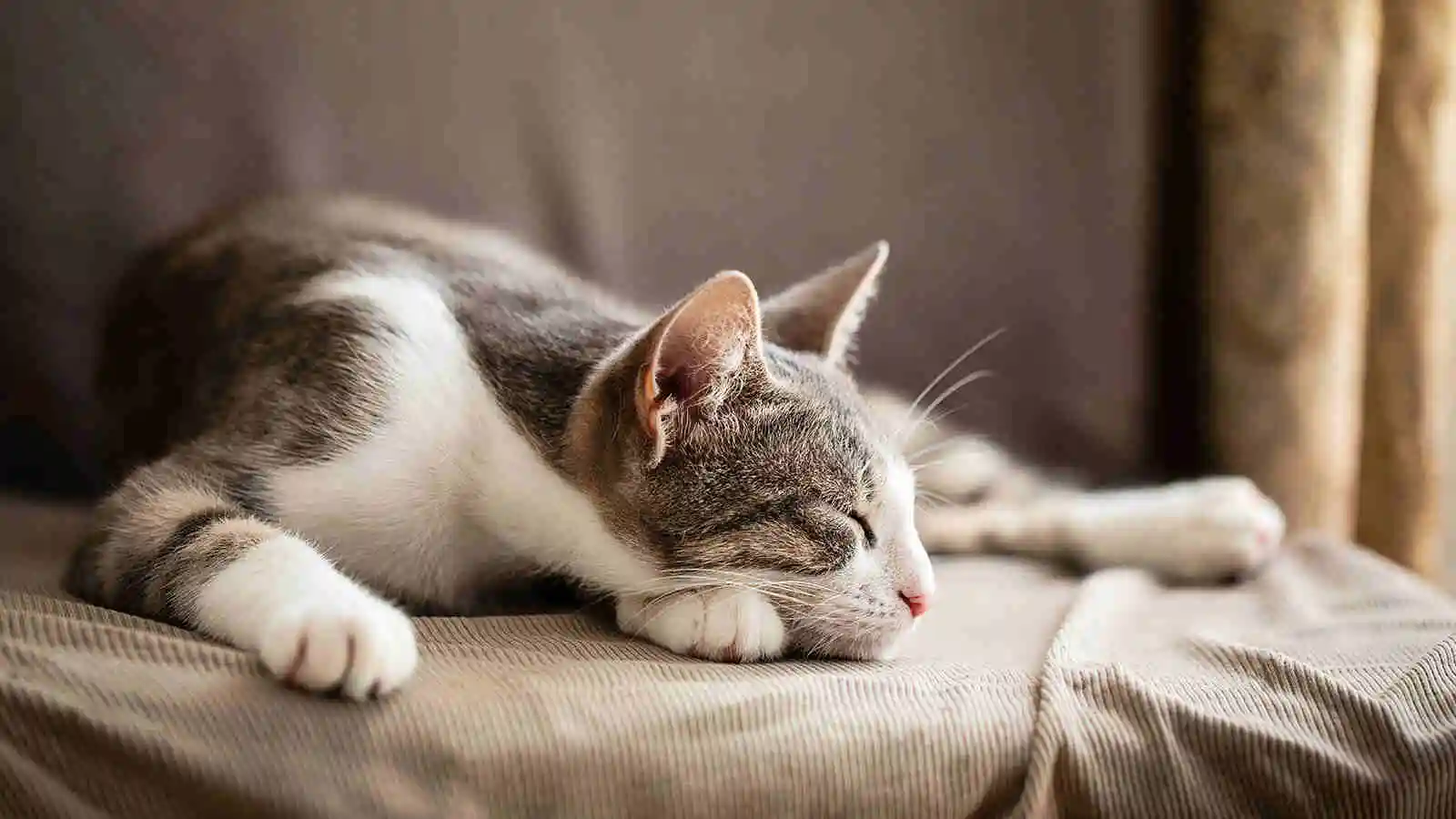
4. The Stretched-Out “Superman” Pose
Some cats sleep on their stomach with their front legs forward and back legs extended behind them. The pose resembles a flying superhero.
This can indicate that a cat feels comfortable enough to stretch out. It may also help the body cool down because the cat is less tightly curled.
5. 5. Sleeping on Your Chest
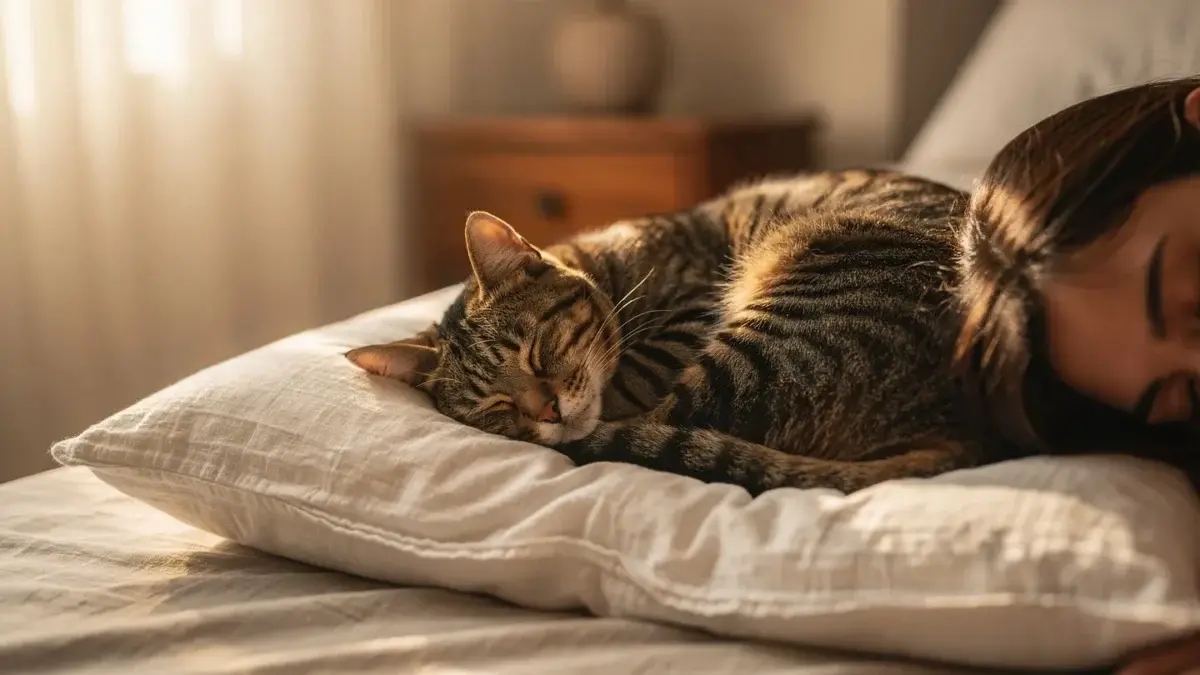
If your cat sleeps on your chest, warmth and bonding may both be involved. Your scent, heartbeat, and familiar presence can make this a reassuring resting place. If you have ever wondered, Why Does My Cat Sleep on Me your cat may simply feel safe and comfortable around you. Some cats also enjoy the warmth and closeness they get from resting on their favorite person.
What does my cat sleeping position mean when it chooses your chest? Often, it means your cat feels comfortable and safe near you.
6. Sleeping at Your Feet
A cat sleeping near your feet can enjoy closeness without giving up personal space.
Affection does not always mean cuddling. Some cats prefer staying close to their favorite person while maintaining a little distance.
7. Sleeping in a Box
Boxes offer an enclosed space that many cats find secure and cozy. Their sides can provide a sheltered feeling while the small space can retain warmth.
If your cat ignores an expensive bed for a cardboard box, there may be nothing unusual about it. Security often matters more to cats than luxury.
8. Sleeping With Another Cat or Dog
Cats that willingly sleep beside another animal may have developed familiarity and trust. Sharing a resting area can also provide warmth and companionship.
However, never force pets to sleep together. Their relationship should be peaceful during normal interactions too.
9. Paws Over the Face
A cat sleeping with its paws over its face may be blocking light or settling into a comfortable position. It can also happen during deep relaxation.
This cute posture is generally not a concern by itself. Consider the rest of your cat’s behavior before assigning a specific meaning.
10. Sleeping With Eyes Half Open
Some cats appear to sleep with their eyes partly open. During light sleep, they can remain somewhat aware of activity around them. The veterinary reference article notes that partially open eyes can occur during rest, while persistent irritation or other symptoms should receive attention.
If your cat otherwise seems healthy, occasional half-open eyes may be normal. Squinting, discharge, redness, or obvious discomfort deserves veterinary attention.
What Does a Cat Sleeping Position Say About Its Mood?
A single position cannot tell you exactly how a cat feels. Instead, combine posture with ears, eyes, tail position, appetite, grooming, energy, and interaction.
For example, a cat stretched out in a sunny spot while eating and playing normally is very different from one that suddenly becomes hunched, stops grooming, and hides.
This broader approach gives you a better understanding of cat body language and puts cat sleeping positions meaning into the wider context of your pet’s daily behavior. Sleeping postures can provide clues about comfort and emotional state, but they are not definite diagnoses.
When Should You Worry About a Change in Sleeping Behavior?
Changes matter more than one particular pose. Why does my cat sleep in different positions? Normal variation is common, but a sudden and persistent change deserves attention.
Watch for combinations such as:
- Sleeping much more or less than usual
- Suddenly hiding to sleep
- A hunched or unusually stiff posture
- Difficulty getting comfortable
- Reduced appetite or activity
- Less grooming
- Changes in litter box habits
- Vocalizing or reacting when touched
The veterinary reference specifically highlights unusual sleeping in a litter box, hunched postures, and increased hiding as behaviors that may warrant closer attention.
Remember that cat sleeping positions meaning cannot diagnose pain or illness on its own. If a new posture appears alongside other symptoms, contacting a veterinarian is safer than interpreting the pose alone.
A Real-Life Case Study: When a Sleeping Habit Changed
Consider a common cat-owner situation. A normally social indoor cat regularly slept stretched across the sofa and sometimes curled beside its owner. Over several days, it began spending more time behind furniture and sleeping in compact positions.
The important clue was not the sleeping position itself. The change also came with reduced play and less interest in food. Rather than assuming the cat had simply found a new sleeping place, the owner arranged a veterinary examination.
The lesson is important: cat sleeping positions meaning becomes most useful when you compare today’s behavior with your cat’s normal routine. A familiar pose can be healthy, while a sudden change plus other symptoms deserves investigation.
How to Create Better Sleeping Spaces for Your Cat
You do not need a complicated setup. Offer several choices:
- A quiet bed away from heavy household traffic
- A warm blanket for cooler weather
- A raised resting spot if your cat enjoys looking around
- A covered or box-like space for privacy
- Easy access to normal household areas
Let your cat choose. Providing options can reveal preferences naturally and help you notice when normal cat sleeping habits change.
Final Thoughts
Understanding cat sleeping positions meaning is less about decoding one perfect message and more about learning your individual cat’s normal routine. A curled body may mean warmth, a chest nap may reflect trust, and a box may simply provide security.
The best approach to cat sleeping positions meaning is to observe patterns instead of judging one pose alone. When sleeping behavior changes suddenly and other signs of illness or stress appear, take those changes seriously and seek professional advice.
Once you understand cat sleeping positions meaning, even the strangest-looking nap can become another small window into your cat’s comfort and personality.
FAQs About cat sleeping positions meaning
Can cats have a favorite sleeping spot?
Yes. Cats often choose spots based on warmth, safety, privacy, and familiarity.
How many hours do cats sleep each day?
Most adult cats sleep around 12–16 hours daily, while kittens and older cats may sleep even more.
Do cats dream while sleeping?
Yes. Cats can dream during REM sleep, and you may notice their whiskers, paws, or eyes moving.
Why does my cat move sleeping spots at night?
Cats may change spots to find different temperatures, quieter areas, or places that feel secure.
Do older cats sleep differently from younger cats?
Yes. Older cats often sleep more and may prefer softer, warmer, and easier-to-access resting areas.

Patrick Bravo takes readers on a heartwarming journey through the world of pet adoption. He champions shelter animals, shares inspiring rescue stories, and encourages families to open their hearts and homes to pets in need.