Bringing home a kitten is exciting, but feeding a young cat can be surprisingly confusing. Kittens grow rapidly during their first year, so their nutritional needs change much faster than those of adult cats. A good feeding routine should provide enough energy for growth without encouraging unhealthy weight gain.
The best kitten feeding schedule by age depends on the kitten’s developmental stage, weight, health, and the type of food being offered. Very young kittens may need frequent milk feeds, while older kittens can gradually move toward two or three meals a day. Veterinary guidelines also emphasize using a complete, balanced diet formulated for growth and adjusting portions according to the individual kitten.
Below is a practical guide to help you understand what to feed, how often to feed, and how to adjust meals as your kitten grows.
Content
Why Is a Kitten Feeding Schedule Important?
A kitten’s body is developing at an impressive rate. Bones, muscles, organs, and the immune system all require adequate nutrients and energy.
Unlike an adult cat, a growing kitten has a relatively small stomach but substantial energy requirements. This is why smaller, more frequent meals are often useful during early development. Veterinary guidance notes that kittens have particularly high energy needs during the rapid-growth stage.
A consistent kitten feeding routine can also make it easier to notice changes in appetite. If a normally enthusiastic kitten suddenly refuses several meals, for example, you are more likely to recognize that something has changed.
Kitten Feeding Schedule by Age
There is no single schedule that works perfectly for every kitten. Age provides a useful starting point, while weight, body condition, food calories, activity, and health determine the final amount.
| Kitten age | Typical feeding approach | Approximate frequency |
|---|---|---|
| Birth–3 weeks | Mother’s milk or kitten milk replacer if orphaned | Very frequent feeds |
| 3–5 weeks | Begin gradual weaning | Several small meals |
| 5–8 weeks | Wet kitten food/gruel, progressing toward solid food | About 4 meals |
| 8 weeks–4 months | Complete kitten food | 3–4 meals |
| 4–6 months | Kitten wet/dry food | 2–3 meals |
| 6–12 months | Complete kitten/growth food | About 2 meals |
These are general starting points, not rigid prescriptions. Commercial food labels provide feeding recommendations based on their specific calorie density, and individual kittens may need adjustments.
Newborn to 3 Weeks
Newborn kittens require special care. If they are nursing normally from their mother, mother’s milk is their primary nutrition. Orphaned kittens generally need a commercially prepared kitten milk replacer rather than ordinary milk.
Very young kittens need frequent feeding because their stomachs are tiny. A veterinary neonatal source notes that kittens in their first two weeks may need feeding approximately every two hours, with intervals gradually extending as they mature.
3 to 5 Weeks
This is when weaning can begin. Veterinary guidelines indicate that commercially balanced kitten foods can be introduced from approximately 3–5 weeks of age.
You can gradually introduce a soft mixture of kitten food and appropriate warm liquid while the kitten continues nursing or receiving appropriate formula.
For owners searching for a kitten feeding schedule for 4 week old kittens, remember that this is a transition period rather than an instant switch from milk to solid food.
5 to 8 Weeks
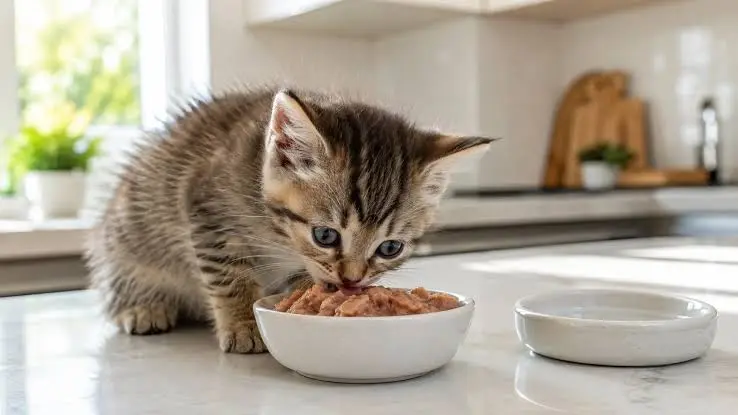
During this period, kittens become increasingly comfortable eating solid food. Wet kitten food can be particularly useful because it is soft and easy for young kittens to manage.
A kitten feeding schedule for 6 week old kittens will commonly include several small meals throughout the day. By around 8 weeks, many kittens are eating kitten food independently.
Patience matters here. Some kittens adapt quickly, while others need more time to become comfortable with new textures.
8 Weeks to 4 Months
Once a kitten is fully weaned, feeding becomes much simpler.
Most young kittens do well with three or four appropriately portioned meals throughout the day. The Royal Veterinary College, for example, recommends four meals daily for kittens from 6–12 weeks and two to three meals for kittens from 3–6 months.
If you’re wondering how many times a day should I feed my kitten, three meals can be a practical starting point for many kittens in this age range, while younger kittens may benefit from more frequent meals.
A kitten feeding schedule for 8 week old kittens might look like:
- 7:00 a.m. — Breakfast
- 12:00 p.m. — Lunch
- 5:00 p.m. — Dinner
- 9:00 p.m. — Small final meal, if appropriate
The exact quantity should come from the food’s feeding guide and your kitten’s individual needs.
3 to 6 Months
At this age, kittens are still growing quickly. They generally need food specifically designed to support growth rather than ordinary adult maintenance food.
For someone searching for a kitten feeding schedule for 3 month old kittens, three meals per day is a useful general framework. As the kitten approaches four to six months, some can gradually move toward two or three meals.
Don’t reduce food simply because your kitten appears to be eating enthusiastically. Growth requires substantial nutrition, but portions still need to be monitored.
6 to 12 Months
Growth gradually slows as kittens approach adulthood. The Royal Veterinary College recommends two meals per day for kittens aged 6–9 months, with a gradual transition toward adult food later in the first year.
This means the best kitten feeding schedule by age should evolve rather than remain identical throughout the first year.
Many kittens can remain on a complete kitten diet until around 12 months, although the appropriate transition point can vary, particularly with larger breeds.
How Often Should Kittens Eat?
So, how often should kittens eat?
The answer changes with age:
- Very young kittens: frequent milk feeds
- Weaning kittens: several small meals
- Young kittens: generally 3–4 meals
- Older kittens: usually 2–3 meals
- Approaching adulthood: commonly 2 meals
Rather than focusing only on the number of meals, think about the total daily food allowance. Divide that allowance among the day’s meals.
A Simple Daily Kitten Feeding Routine
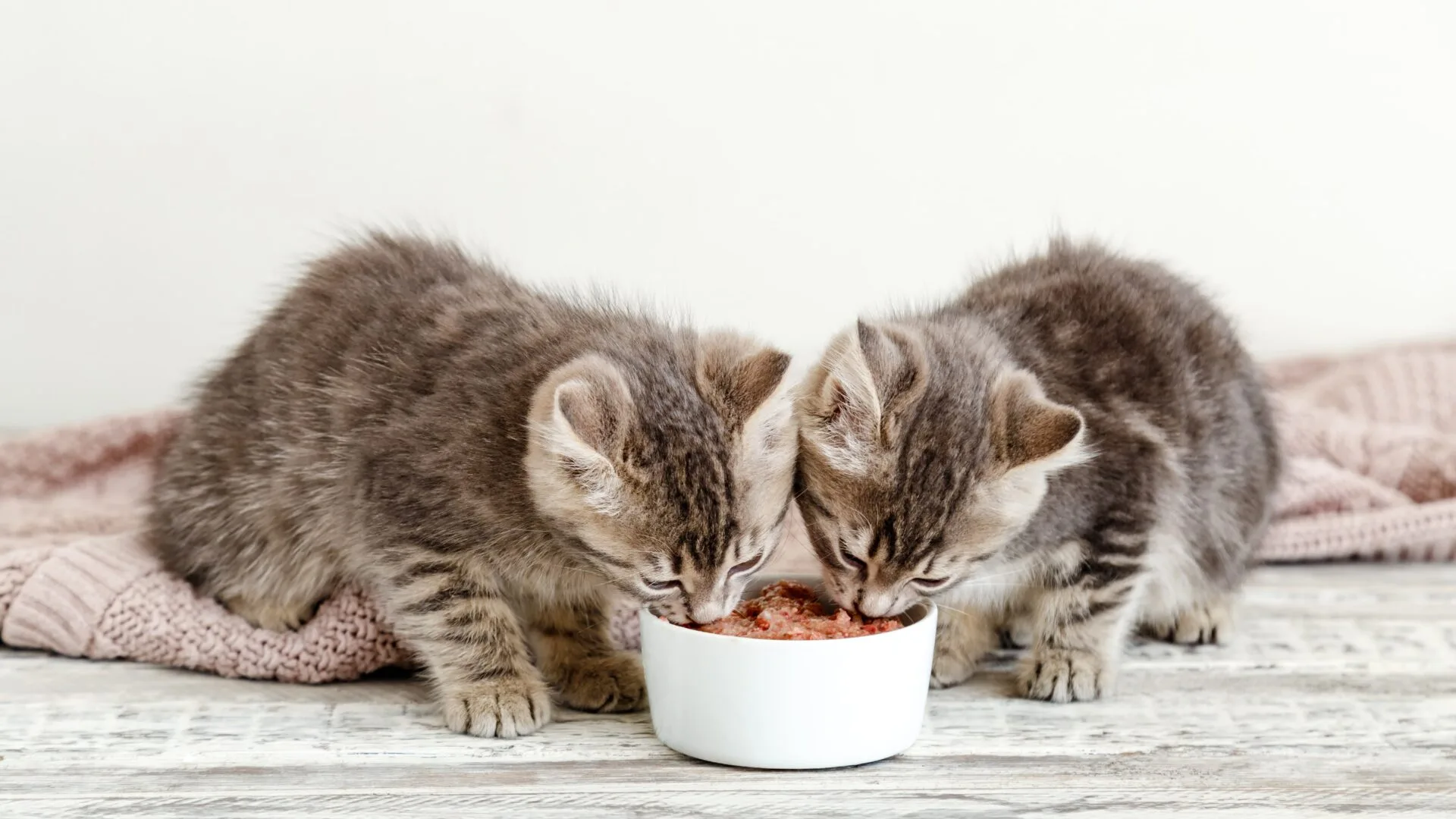
Here’s an example routine for a healthy young kitten that is already fully weaned:
7:00 a.m. — Breakfast
Give the measured morning portion.
12:00 p.m. — Lunch
Offer another small portion and refresh the water.
5:00 p.m. — Dinner
Provide the next measured meal.
9:00 p.m. — Optional final meal
For younger kittens requiring four meals, divide the daily allowance accordingly.
This approach makes kitten feeding times predictable and can be especially helpful for busy households.
Keep fresh drinking water available and provide food in a quiet location. Cats generally prefer eating somewhere they won’t be startled by excessive noise or activity.
Real-Life Case Study: Adjusting a Kitten’s Routine
Consider a common situation: a family adopts an eight-week-old kitten named Milo. Initially, they leave a large bowl of dry food available all day because they assume a growing kitten should be allowed to eat whenever it wants.
Milo begins eating frequently, and within a few weeks his owners notice that he is gaining weight faster than expected.
Instead of simply removing food, they switch to measured daily portions divided into several meals. They also record his weekly weight and discuss his growth with their veterinarian.
This approach gives the owners much better information. They can see exactly how much Milo eats and make gradual adjustments rather than guessing.
The lesson isn’t that free-feeding is automatically wrong. Feeding strategies can vary between cats. The important point is to monitor intake, growth, and body condition and individualize the plan. Veterinary feline guidelines specifically recommend adjusting nutrition according to the individual cat rather than relying exclusively on generic recommendations.
Common Kitten Feeding Mistakes to Avoid
Even well-intentioned owners can make feeding mistakes.
Feeding Adult Cat Food Too Early
Kittens have different nutritional requirements from mature cats. Choose a food designed for growth.
Guessing Portions
A bowl filled by eye can make it difficult to monitor calorie intake. Use the food manufacturer’s recommendations as a starting point.
Changing Food Suddenly
Cats can be sensitive to abrupt dietary changes. Veterinary guidelines recommend gradual transitions, commonly over about 7–10 days.
Ignoring Weight Changes
Regularly checking growth and body condition can help identify whether the feeding plan needs adjustment.
Giving Cow’s Milk to Young Kittens
Very young orphaned kittens require an appropriate kitten milk replacer rather than ordinary cow’s milk. If you’re caring for a neonatal kitten, ask a veterinarian for specific instructions.
Final Thoughts
Creating the best kitten feeding schedule by age is less about following a rigid timetable and more about understanding how your kitten’s needs change during growth. Newborns need frequent milk feeds, weaning kittens gradually learn to eat solid food, and older kittens can move toward fewer, measured meals.
Choose a complete kitten diet, divide the daily allowance appropriately, monitor growth, and adjust portions as your kitten develops. Most importantly, remember that feeding charts are starting points—not substitutes for individualized veterinary advice.
With a consistent kitten feeding routine, appropriate nutrition, and regular monitoring, you can give your young cat a strong nutritional foundation for a healthy adulthood.
FAQs About Kitten Feeding Schedule
How many times a day should I feed my kitten?
Young kittens commonly need three to four meals daily, while older kittens can gradually move toward two meals.
When can kittens eat solid food?
Weaning can begin around 3–5 weeks, with kittens gradually introduced to commercially balanced kitten food.
How much food should I give my kitten?
Use the food label as a starting point and adjust according to your kitten’s weight, growth, body condition, and veterinary advice.
Should kittens eat wet or dry food?
Both can be appropriate when nutritionally complete for growth. Some owners also use a combination of the two.
When should kittens switch to adult cat food?
Many kittens transition around 9–12 months, but the ideal timing can depend on the individual kitten and breed.

Patrick Bravo takes readers on a heartwarming journey through the world of pet adoption. He champions shelter animals, shares inspiring rescue stories, and encourages families to open their hearts and homes to pets in need.