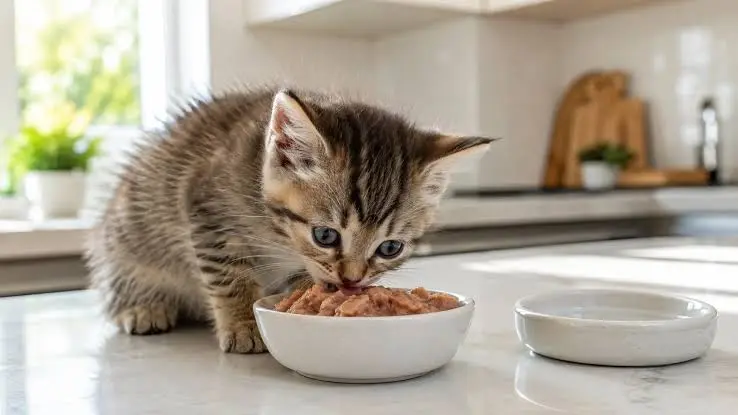
If your cat comes running whenever you open the refrigerator or sit down for dinner, you may wonder, what human food can cats eat without putting their health at risk? The good news is that some simple human foods can be safe treats for cats when they are properly prepared and served in small amounts.
However, cats have different nutritional needs from people. They are obligate carnivores, so their main diet should provide the nutrients they need from complete and balanced cat food. Human food should be an occasional extra, not a replacement for their normal meals.

Content
Can Cats Eat Human Food?
Yes, cats can eat certain human foods, but the type, preparation, and portion all matter.
The best human food cats can eat tends to be plain, cooked, and relatively simple. Cooked chicken, turkey, some fish, and cooked eggs are examples of foods that can work as occasional treats for healthy cats.
A useful rule is to think of human food as a treat rather than a meal. Treats and additional foods should remain a small part of your cat’s daily calories, with the main diet coming from nutritionally complete cat food.
What Human Food Can Cats Eat Safely?
Here are some practical safe human foods for cats that can be offered in small portions.
1. Cooked Chicken
Plain cooked chicken is one of the easiest choices when considering what human food can I give my cat. It provides animal protein and is usually appealing to cats.
Serve chicken boiled or baked without salt, spices, butter, sauces, skin, or bones. Raw chicken should be avoided because it can carry harmful bacteria.
If you are preparing plain chicken for dinner, set aside a tiny piece before adding seasoning. Let it cool, remove bones and skin, and cut it into small pieces.
2. Turkey
Plain cooked turkey can also be a suitable occasional treat. Like chicken, it should be completely cooked and free from bones, skin, gravy, seasoning, and excessive fat.
Avoid processed turkey products such as heavily seasoned deli meat because they may contain ingredients that are unsuitable for cats.
3. Cooked Fish
Cats often love fish, and small amounts of plain cooked salmon, cod, or similar fish can provide protein and beneficial nutrients.
The important part is preparation. Never serve fish with bones, heavy seasoning, sauces, or large amounts of oil. Raw and smoked fish are also poor choices for a simple cat treat.
4. Cooked Eggs
If you are wondering can cats eat cooked eggs, the answer is yes for most healthy cats when eggs are fully cooked and served plain.
A small piece of boiled or scrambled egg can provide protein. Skip salt, butter, spices, and other additions. Raw eggs are not recommended because of bacterial risks and potential nutrient-absorption concerns.
5. Plain Pumpkin
Plain cooked pumpkin can be another occasional food. It contains fiber and may support normal digestion.
Choose plain pumpkin without sugar, spices, butter, or pie filling. A small amount is enough; your cat does not need a bowlful.
6. Small Amounts of Certain Fruits
Some cats can safely enjoy tiny portions of fruits such as blueberries, watermelon, or peeled apple flesh.
Fruit is not nutritionally necessary for cats, though, and many cats are completely uninterested in it. If you offer fruit, remove seeds, pits, stems, and other potentially hazardous parts, and keep the portion very small.
7. Certain Vegetables
Some cooked vegetables, including carrots and green beans, may be offered in small portions. They should be plain and prepared in a way that reduces choking risk.
Do not assume that because a vegetable is healthy for humans, it automatically belongs in a cat’s diet. Cats do not need vegetables to replace their animal-based nutrition.
What Human Foods Should Cats Avoid?
Knowing what human food can cats eat safely is only half the equation. Cat owners should also recognize foods that can be dangerous.
Some foods and ingredients that should be kept away from cats include:
- Onions, garlic, chives, and leeks
- Chocolate
- Alcohol
- Grapes and raisins
- Caffeinated drinks and foods
- Foods containing xylitol
- Heavily salted or seasoned foods
- Cooked bones
- Raw meat and raw eggs
Onions and garlic are particularly important to avoid, while chocolate, alcohol, grapes, raisins, caffeine, and xylitol can also pose serious risks.
Also remember that a safe ingredient can become unsuitable when combined with sauces, seasonings, excessive fat, or other ingredients.
What Can Cats Eat Besides Cat Food?
If you are asking what can cats eat besides cat food, think of small, simple additions rather than alternative meals.
A few pieces of plain cooked chicken, a tiny amount of cooked egg, or a small spoonful of plain pumpkin may work as occasional treats for an otherwise healthy cat.
One mistake I often see new cat owners make is assuming that because a cat enjoys something, the food must be appropriate as a regular meal. Cats can happily eat something that does not provide everything their bodies require.
Complete cat food should remain the foundation of the diet. Human food should add variety without taking away from balanced nutrition.
How Should You Prepare Human Food for Cats?
Preparation is just as important as the ingredient.
Follow these simple rules:
- Keep it plain: Avoid salt, garlic, onion, sauces, spices, butter, and seasoning.
- Cook meat thoroughly: Do not offer raw chicken or other raw meats casually.
- Remove bones: Bones can cause injuries or digestive problems.
- Cut food into small pieces: This makes treats easier to manage.
- Start with a tiny amount: A new food can cause digestive upset.
- Watch your cat: Stop offering the food if vomiting, diarrhea, or other unusual symptoms appear.
- Ask your veterinarian when unsure: Especially if your cat has a medical condition or eats a prescription diet.
A Real-Life Case Study: When a Treat Becomes Too Much
Imagine an indoor cat named Milo whose owner regularly gives him pieces of chicken, tuna, cheese, and leftovers because he always begs during family meals.
At first, there seems to be no problem. Milo enjoys the treats and continues eating his normal food. Gradually, however, his owner notices that he is gaining weight and sometimes leaves part of his regular meal untouched.
The problem is not necessarily that every individual treat is toxic. The bigger issue is quantity and balance. Extra calories can add up quickly, particularly in an indoor cat with relatively low daily activity.
How Much Human Food Can Cats Eat?
There is no single portion that works for every cat. A kitten, adult cat, overweight cat, senior cat, and cat on a prescription diet can have very different nutritional needs.
As a general principle, treats and extras should remain a small part of daily calorie intake. A practical guideline is to keep treats and other extras around 10% or less of daily calories, while the remaining calories come from complete and balanced food.
If your cat is overweight, has diabetes, kidney disease, food allergies, digestive problems, or another medical condition, ask your veterinarian before introducing new treats.
Can Human Food Make Cats Sick?

Yes. Even foods that are safe for people can cause problems for cats when they are toxic, improperly prepared, given in excessive amounts, or simply do not agree with an individual cat.
For example, fatty foods may cause digestive upset, while raw foods can carry harmful pathogens. Seasonings containing onion or garlic can also be dangerous.
If your cat accidentally eats a known toxic food, do not wait for symptoms before seeking professional veterinary advice. Contact your veterinarian or an appropriate animal poison service promptly.
Final Verdict
So, what human food can cats eat? Healthy cats can enjoy small amounts of plain, properly cooked foods such as chicken, turkey, fish, and eggs. Some cats may also tolerate tiny portions of plain pumpkin, selected vegetables, or certain fruits.
The most important rule is moderation and proper preparation. Human food should complement—not replace—a complete and balanced feline diet.
Before sharing anything from your plate, check the ingredients, remove bones and harmful parts, avoid seasonings, and offer only a small portion. If your cat has a medical condition, food sensitivity, or special dietary requirements, speak with your veterinarian first.
When offered responsibly, an occasional cat-safe treat can be a simple way to share a little variety with your feline companion without compromising their nutritional needs.
FAQs About What Human Food Can Cats Eat
What human foods are safe for cats?
Plain cooked chicken, turkey, fish, and eggs can be safe for healthy cats when offered occasionally and in small portions.
What human food can I give my cat every day?
Human food should not become a daily replacement for balanced cat food. Ask your veterinarian about suitable treats for your cat.
Can cats eat rice?
Plain, fully cooked rice can generally be eaten by cats in small amounts, but it provides little nutritional value compared with their normal diet.
Can cats eat vegetables?
Some cats can eat small amounts of plain cooked vegetables such as carrots or green beans, but vegetables are not essential to feline nutrition.
What human foods are toxic to cats?
Chocolate, onions, garlic, grapes, raisins, alcohol, caffeine, and certain sweeteners such as xylitol can be dangerous and should be avoided.

Patrick Bravo takes readers on a heartwarming journey through the world of pet adoption. He champions shelter animals, shares inspiring rescue stories, and encourages families to open their hearts and homes to pets in need.