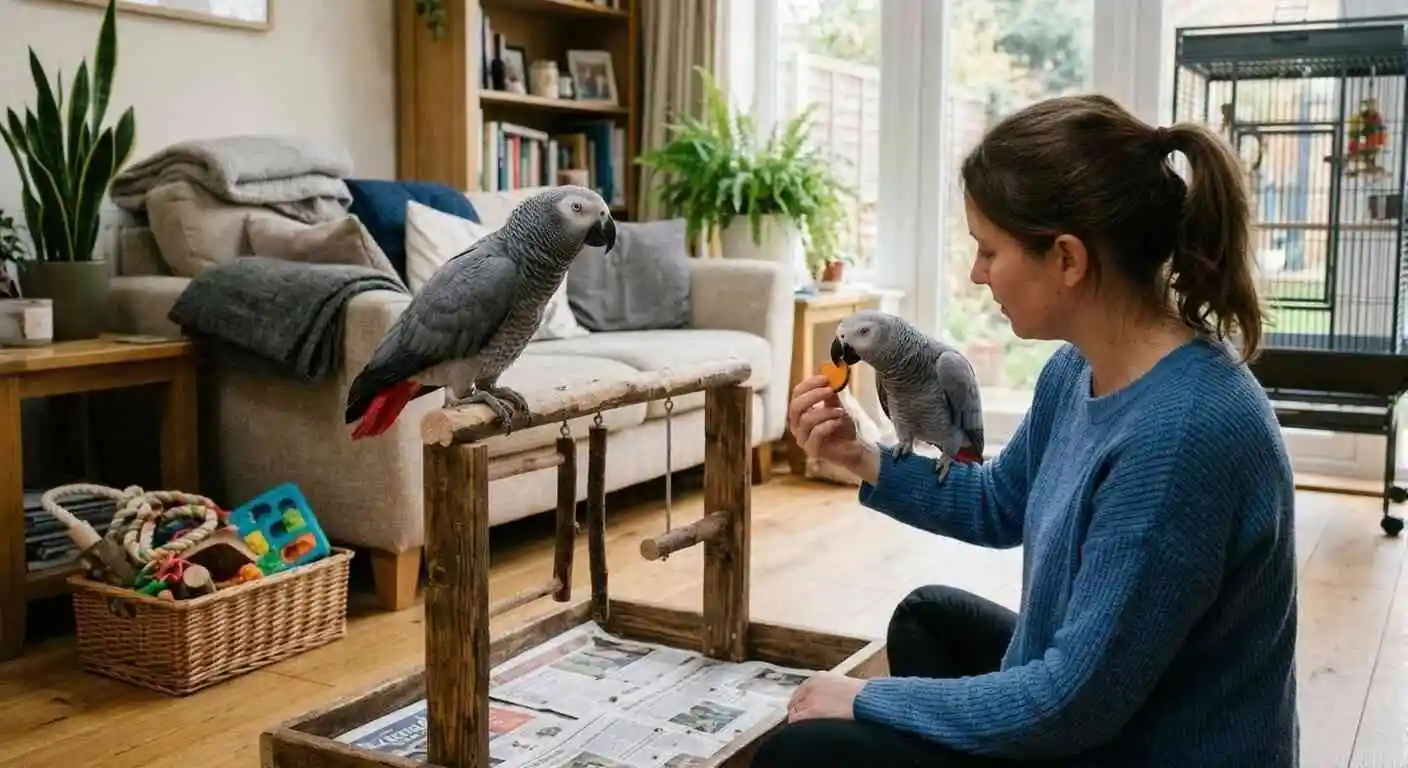
Taming a cockatiel is less about teaching commands and more about helping your bird feel safe around you. A new cockatiel may hide, move away from your hand, hiss, or even bite when it feels threatened. That does not necessarily mean it is unfriendly. In many cases, it simply needs time to understand that you are not a danger.
The best approach to how to tame a cockatiel is to move slowly, respect its body language, and reward small steps toward interaction. Positive reinforcement is widely used in companion-bird training because rewards can strengthen desired behaviors while also providing social and mental enrichment.
Whether you have a young bird, a newly adopted cockatiel, or an older nervous bird, the same basic principle applies: build trust before expecting cooperation.
Content
How Long Does It Take to Tame a Cockatiel?
There is no fixed timetable for cockatiel taming. Some birds become comfortable with their owners relatively quickly, while others need weeks or longer. Age, previous handling, personality, environment, and past experiences can all affect progress.
Instead of measuring success by the number of days, watch for behavioral changes. A cockatiel that stops retreating when you enter the room, accepts a treat near your hand, or calmly remains on its perch while you approach is already making progress.
One of the most important lessons in how to tame a cockatiel step by step is not to rush these early victories. Trust grows through repeated, predictable experiences.
Create a Safe Environment First
Before starting formal training, make your cockatiel’s surroundings comfortable.
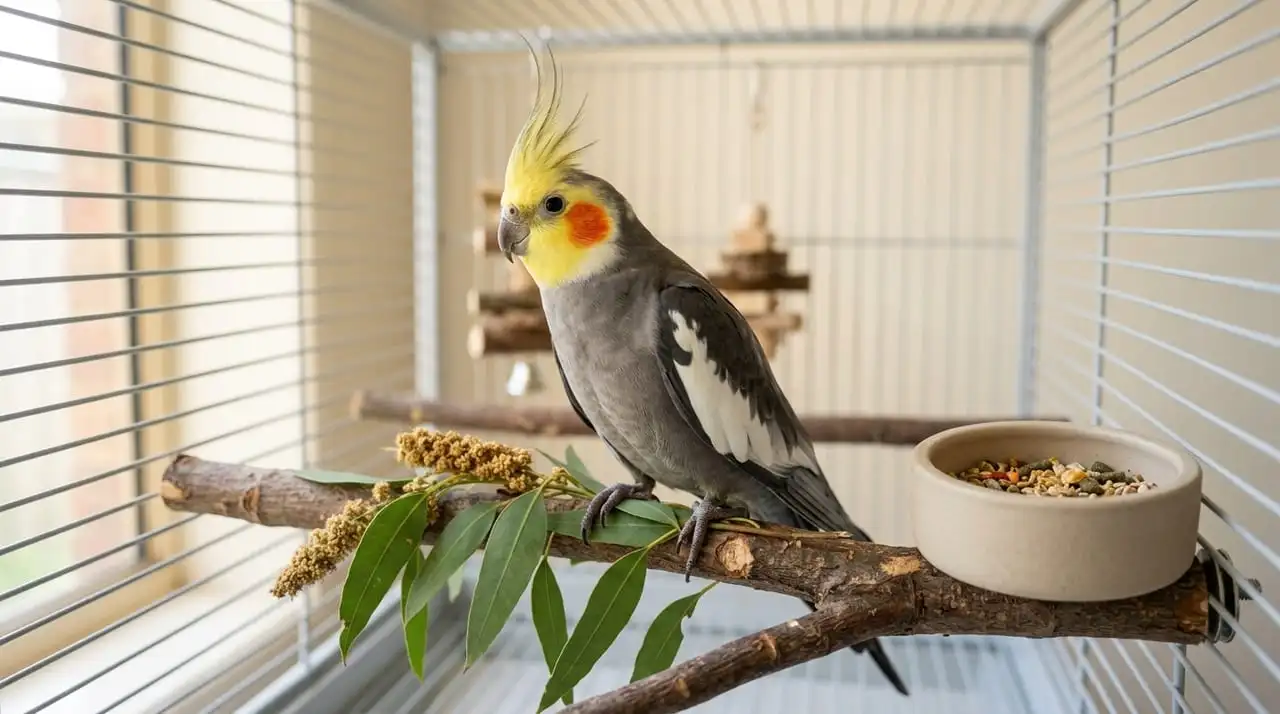
Place the cage somewhere where your bird can see and hear normal household activity without being surrounded by constant noise. Avoid repeatedly reaching inside the cage just to touch the bird. Its cage should be a place where it can retreat and relax.
During the first few days, spend time near the cage without demanding interaction. Read, work, or simply talk softly to your cockatiel.
That foundation can make later cockatiel bonding much easier.
Learn Your Cockatiel’s Body Language
Understanding cockatiel body language can prevent many taming mistakes.
A relaxed bird may calmly preen, eat, explore, or remain comfortably perched while you are nearby. A frightened bird may lean away, freeze, attempt to escape, hiss, or display other defensive behavior.
Pay attention to the whole bird rather than relying on one signal. The crest, feathers, posture, eyes, vocalizations, and movement can all provide useful context. If your cockatiel becomes vocal at night, you may also wonder why do birds chirp at night. Occasional nighttime sounds can happen for several reasons, including environmental noises, changes in light, disturbances, or a bird reacting to something it hears nearby.
Start With Treats and Positive Reinforcement
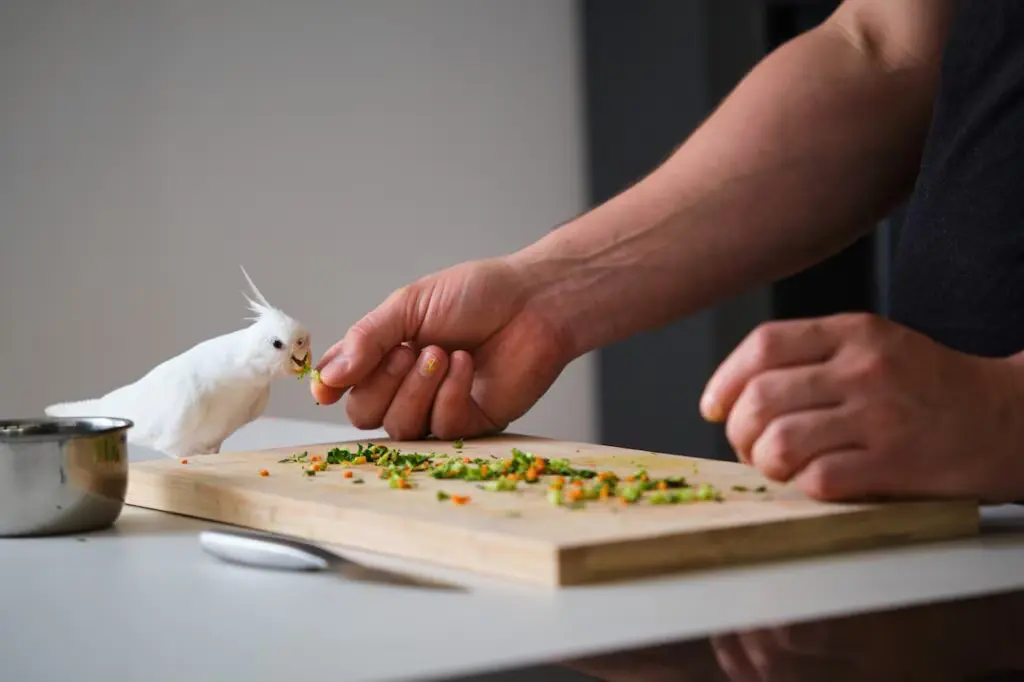
Food can be an excellent bridge between distance and trust. Choose a small treat your bird genuinely enjoys, and use it specifically during calm interactions.
Millet is commonly used as a bird-training reward, although individual birds have different preferences. The Association of Avian Veterinarians describes positive reinforcement as rewarding desired behavior with something the bird values, such as food, attention, or praise.
Start by offering the treat while keeping your hand at a comfortable distance.
How to Tame a Cockatiel Step by Step
Once your cockatiel is comfortable eating around you, you can begin hand-taming a cockatiel.
1. Let Your Hand Become Familiar
Place your hand near the cage without chasing or touching your bird. Keep your movements slow.
At first, your goal isn’t to make the bird step onto your hand. Your goal is simply to make the hand less frightening.
2. Offer a Favorite Treat
Hold a small treat between your fingers and allow your cockatiel to approach voluntarily.
If your bird takes the treat and moves away, let it. That is still progress.
3. Gradually Reduce the Distance
Over time, encourage your cockatiel to remain closer to your hand for its reward.
Don’t suddenly move your hand toward the bird when it approaches. Doing so can undo some of the confidence you have built.
4. Introduce Your Finger as a Perch
When your bird is comfortable near your hand, position your finger gently in front of its lower chest or feet area without pushing.
Reward curiosity first. If it touches your finger with one foot, that can be a training success.
5. Practice Step-Up Training
Eventually, introduce a simple verbal cue such as “step up.”
Present your finger calmly and reward the bird for climbing onto it. Begin with very short repetitions. You don’t need to keep your bird on your hand for several minutes.
The Association of Avian Veterinarians also notes that target training can provide social enrichment, strengthen the relationship between bird and owner, and give birds a choice about participating.
How to Train a Cockatiel to Step Up
Step-up training should feel like an invitation rather than a command backed by force.
When your cockatiel places one foot on your finger, reward it. Once it confidently places both feet on your hand, reward again. Gradually increase the amount of time it stays there before receiving its treat.
A useful training routine might be:
- Say “step up.”
- Present your finger calmly.
- Wait for your bird to respond.
- Reward the desired behavior immediately.
- Return the bird to its perch if it wants to leave.
- Repeat a few times.
- Finish while the experience is still positive.
How to Tame a Scared Cockatiel Without Breaking Its Trust
A scared cockatiel needs a slower approach.
If your bird runs whenever you approach, don’t begin by trying to touch it. Start several steps earlier. Sit nearby, speak softly, and offer treats without invading its personal space.
The mistake I see most often with new bird owners is confusing physical access with trust. Being able to catch a bird doesn’t mean the bird trusts you.
Real progress looks different. Your cockatiel chooses to approach you, accepts a reward from your hand, remains relaxed nearby, and eventually participates in training voluntarily.
What If Your Cockatiel Bites?
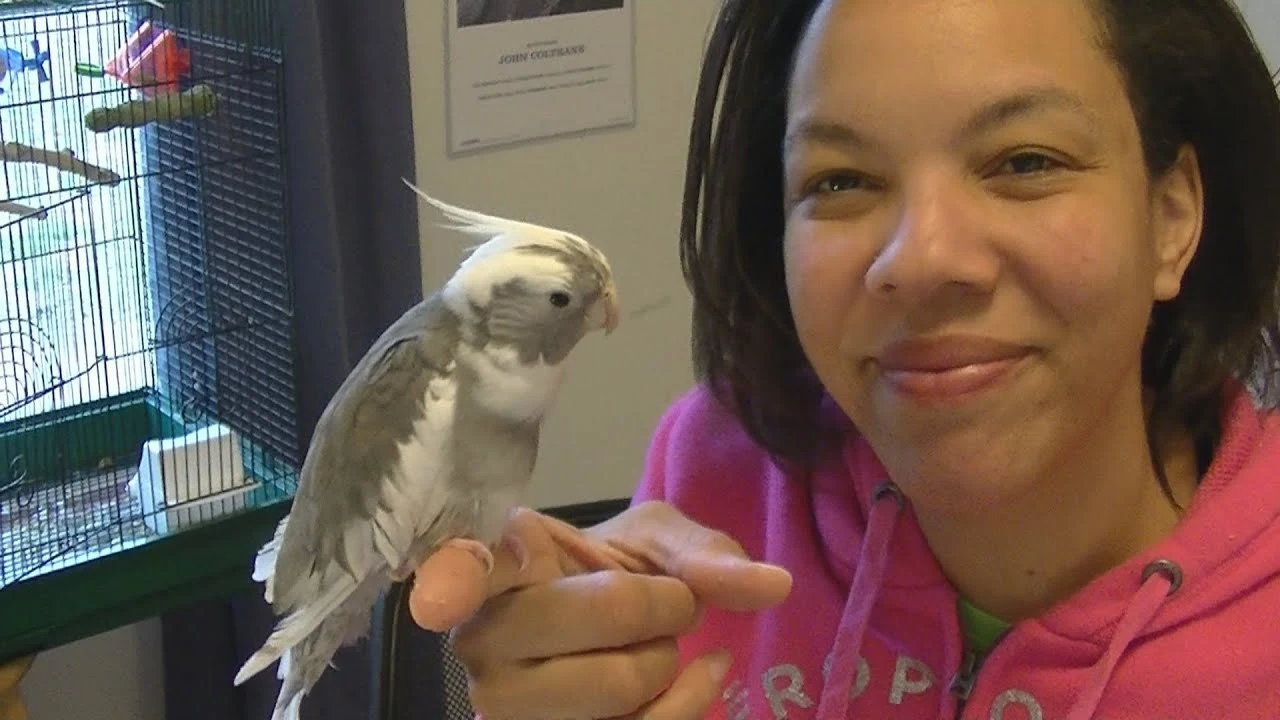
If you’re wondering how to tame a cockatiel that bites, start by identifying why the bite is happening.
Your bird may be frightened, overwhelmed, territorial, uncomfortable with hands, or simply telling you that you’ve moved too quickly.
Don’t punish, yell, chase, or hit the bird. These reactions can make your hands even more frightening.
Instead, stop the interaction, allow your cockatiel to settle, and return to an easier training step later.
If biting happens specifically when you present your hand, try working around the problem. For example, you might first train your bird to step onto a familiar perch before transitioning to your hand.
Real-Life Case Study: Building Trust One Small Step at a Time
A useful example comes from a 2026 cockatiel owner sharing their experience online after adopting a bird. Rather than immediately trying to handle the bird, the owner described simply sitting beside the cage, eating nearby, talking, and giving the cockatiel space. After a little over a week, the bird was already showing more relaxed behaviors, including sleeping comfortably in the owner’s presence, grinding its beak, and allowing the owner to offer treats.
What makes this example valuable isn’t the exact timeline. It’s the method.
The owner recognized that trust was developing before the bird was completely comfortable with hands. That is an important distinction for beginners: progress doesn’t always look like stepping onto your finger.
Sometimes progress is simply a bird deciding it can relax while you’re in the room.
Final Thoughts
Learning how to tame a cockatiel is really a lesson in patience. Your goal isn’t to make your bird obey you as quickly as possible. It’s to create enough positive experiences that your cockatiel eventually feels comfortable choosing interaction with you.
Start with safety, learn your bird’s body language, use positive reinforcement, introduce treats, and gradually work toward step-up training. If progress slows, don’t assume you’ve failed. Simply return to the last step where your bird felt comfortable.
With consistency and respect, those tiny moments—a treat taken from your hand, a relaxed bird sitting beside you, or that first confident step onto your finger—can become the foundation of a strong and rewarding relationship.
Explore Smart Pets Hub’s guide on How to Tame a Cockatiel, plus helpful pet care, training tips, behavior advice, and more information for happy pets.
FAQs About How to Tame a Cockatiel
How do I get a cockatiel to trust you?
Spend time near your bird, move slowly, offer favorite treats, and reward calm voluntary interactions. Avoid forcing physical contact.
How long does it take to tame a cockatiel?
It varies by individual bird. A previously handled bird may progress quickly, while a fearful or poorly socialized bird can require considerably more patience.
Can you tame an adult cockatiel?
Yes. How to tame an adult cockatiel is fundamentally about the same principles: patience, consistency, positive reinforcement, and respecting the bird’s boundaries.
Can you tame an adult cockatiel?
Yes. How to tame an adult cockatiel is fundamentally about the same principles: patience, consistency, positive reinforcement, and respecting the bird’s boundaries.
How do I handle a cockatiel without scaring it?
Introduce your hand gradually, avoid sudden movements, and reward calm behavior. Never chase your bird around the cage to force interaction.

Patrick Bravo takes readers on a heartwarming journey through the world of pet adoption. He champions shelter animals, shares inspiring rescue stories, and encourages families to open their hearts and homes to pets in need.