If you are thinking about bringing one of these intelligent birds home, you may wonder, are African grey parrots good pets? The short answer is yes—but they are not the right choice for every household. African Grey parrots are highly intelligent, social, playful, and famous for their ability to imitate human speech and everyday sounds. They can form strong bonds with their owners and become wonderful companion birds when their physical and emotional needs are met.
However, asking are African grey parrots good pets also means looking beyond their impressive talking ability. These birds need attention, enrichment, training, a suitable diet, veterinary care, and a long-term commitment. If you can provide those things, an African Grey can become a fascinating part of your family.
Content
Are African Grey Parrots Good Pets?
For the right owner, are African grey parrots good pets is a question with a positive answer. They are interactive birds that often enjoy climbing, chewing, learning sounds, and spending time with people. Their intelligence makes them highly trainable, but it also means they can become bored when their environment is predictable or they receive too little interaction.
African Greys are also known for forming close relationships with people. Some may become particularly attached to one family member, so early and gentle socialization is important if you want a confident family companion.
The important point is that a good pet is not necessarily an easy pet. An African Grey can be rewarding precisely because it is such an intelligent and responsive animal.
Why Do African Grey Parrots Make Good Pets?
There are several reasons people become devoted to these birds.
1. They Are Extremely Intelligent
African Grey intelligence is one of their biggest attractions. They can learn words, whistles, household sounds, and routines. Some birds develop impressive vocabularies and use sounds in ways that seem surprisingly purposeful.
This intelligence also makes training enjoyable. Simple activities such as learning to step onto a perch, identifying toys, or responding to familiar cues can provide valuable mental stimulation.
2. They Can Build Strong Bonds
African Grey parrots are social animals. With regular positive interaction, they can become affectionate and engaged companions.
This is one reason people ask, are African grey parrots good pets for beginners? Their ability to bond is wonderful, but inexperienced owners can sometimes misread their body language or expect constant affection. Learning to recognize when your bird wants attention—and when it wants space—is essential.
3. They Have Fascinating Personalities
African Grey personality varies from bird to bird. One may be playful and outgoing, while another may be cautious around unfamiliar people.
They can be funny, observant, stubborn, affectionate, and surprisingly opinionated. Living with one often feels less like owning a decorative bird and more like sharing your home with a highly intelligent companion.
What Makes African Grey Parrots Challenging Pets?
The same qualities that make these birds interesting can also make them demanding.
If you are still asking are African grey parrots good pets, consider the amount of daily commitment involved.
Mental Stimulation Is Essential
An intelligent bird needs something to think about. Boredom and loneliness can contribute to undesirable behaviors, including excessive screaming and feather-destructive behavior.
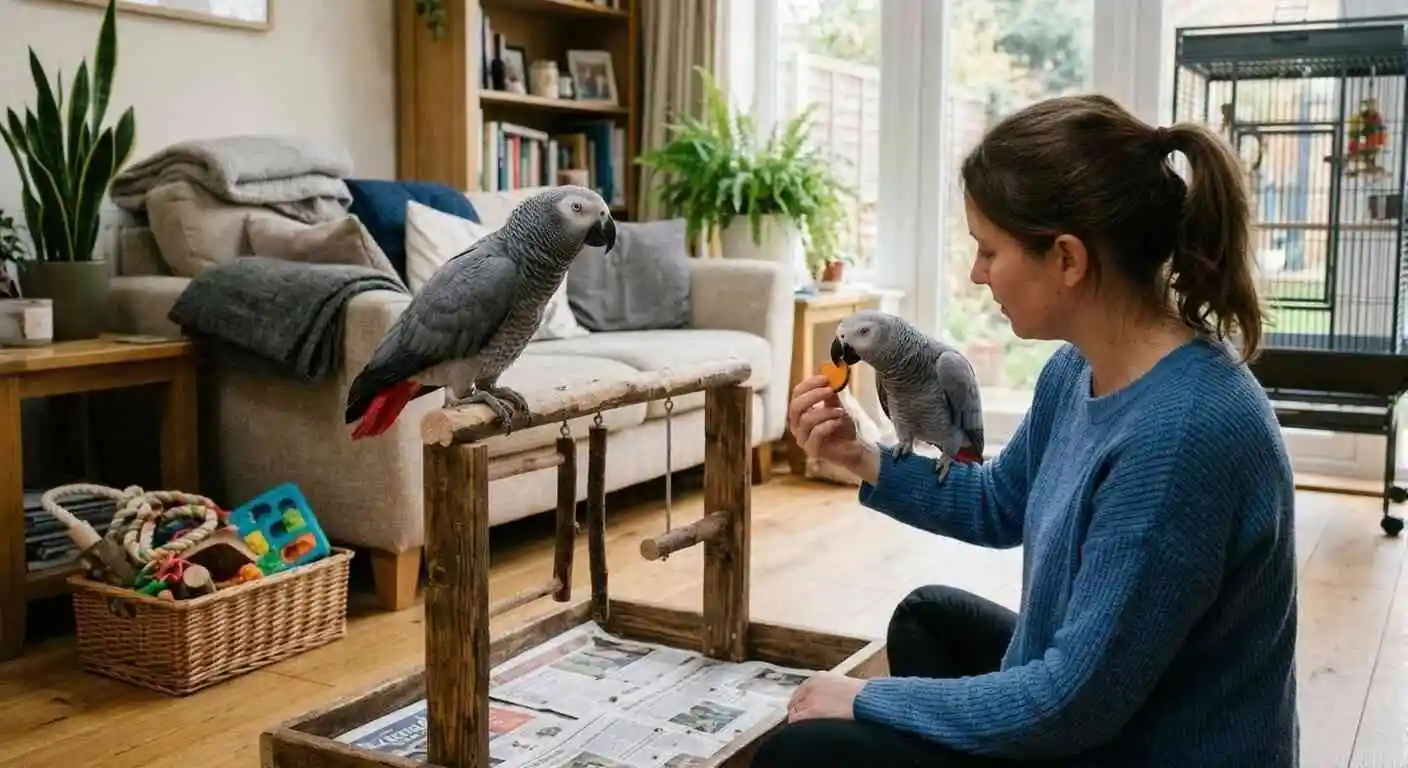
Offer safe chewing materials, rotating toys, foraging activities, training sessions, and supervised time outside the cage. You do not need to entertain your bird every second, but its environment should provide opportunities to explore and make choices.
They Need Social Interaction
African Greys generally do best when they receive regular interaction. If your lifestyle keeps you away from home for most of the day, think carefully before getting one.
A bird that receives little attention may become frustrated or develop behavioral problems. This is an important consideration when deciding whether are African grey parrots good pets for beginners.
They Are a Long-Term Commitment
An African Grey is not a short-term pet. Their long lifespan means ownership can become a commitment spanning decades. That makes planning important before bringing one home.
Consider who will care for the bird if your work schedule changes, you move, travel frequently, or your family circumstances change.
Are African Grey Parrots Easy to Care For?
If your definition of easy means “feed it and occasionally clean the cage,” then no, are African grey parrots easy to care for is not the answer most experienced owners would give.
African Grey parrot care includes appropriate housing, daily fresh water, a balanced diet, enrichment, exercise, social interaction, cleaning, and preventative veterinary care.
Diet deserves particular attention. African Greys can be vulnerable to nutritional problems when fed an inappropriate seed-heavy diet. Veterinary guidance generally recommends a balanced diet based around formulated food, supplemented with appropriate fruits and vegetables.
Their enclosure also needs enough room for comfortable movement, climbing, and wing exercise. Bigger is generally better for pet-bird housing, provided the cage is safe and appropriately designed.
What Is the African Grey Temperament Like?
The African Grey temperament can be sensitive and observant. Some birds are comfortable with new experiences, while others need considerable time to accept unfamiliar people or situations.
This is why forcing physical interaction is usually a poor approach. If a bird moves away, becomes tense, or gives warning signals, give it space and try again later.
Training should focus on patience and positive reinforcement rather than punishment. Building trust can take time, but the resulting relationship can be extremely rewarding.
Real-Life Case Study: Lily and Fear-Based Biting
A documented avian behavior case involving a 9-month-old African Grey named Lily shows why understanding behavior matters. Lily was normally sweet but began biting when unfamiliar people—including her owner’s new boyfriend—tried to handle her. The behavior was identified as fear-based aggression.
Instead of forcing Lily to interact, her owner gradually introduced her to unfamiliar people in a neutral setting. Lily was encouraged to step onto another person’s hand and then return to her trusted caretaker. Successful interactions were rewarded with praise.
Over time, Lily learned that unfamiliar people could be associated with positive experiences.
This case is a useful reminder that are African grey parrots good pets cannot be answered by personality alone. The owner’s ability to understand body language, respect boundaries, and use patient training matters just as much.
Are African Grey Parrots Good Family Pets?
In suitable households, they can be excellent family pets, but expectations should be realistic. They may bond more strongly with one person, and not every bird will happily accept handling from everyone.
Families should teach children to respect the bird’s boundaries. Children should never chase, grab, tease, or force a parrot to interact.
If everyone understands the bird’s behavior and participates calmly in its care, are African grey parrots good family pets becomes much easier to answer positively.
Pros and Cons of African Grey Parrots
Pros
- Highly intelligent and trainable
- Excellent ability to mimic sounds
- Strong potential for bonding
- Playful and interactive
- Fascinating individual personalities
- Can provide years of companionship
Cons
- Require substantial daily attention
- Need regular mental stimulation
- Can develop behavioral problems when bored or stressed
- May become strongly attached to one person
- Require specialized nutrition and veterinary care
- Long lifespan means a serious commitment
Who Should Own an African Grey Parrot?
So, are African grey parrots good pets for you specifically?
They may be a good match if you have time for daily interaction, enjoy training animals, can provide a stimulating environment, and are prepared for long-term responsibility.
They may be a poor choice if you want a low-maintenance pet, travel constantly, dislike noise, or cannot commit to specialized bird care.
Before buying or adopting one, locate an avian veterinarian and learn about its dietary, housing, social, and behavioral needs. Regular veterinary checkups are an important part of maintaining a healthy relationship with an African Grey.
Final Verdict: Are African Grey Parrots Good Pets?
Ultimately, are African grey parrots good pets? Yes, they can be exceptional pets for owners who understand what they require.
They are intelligent, social, entertaining, and capable of forming meaningful relationships. But they are not simple cage pets that can be ignored for long periods.
If you can provide proper African Grey parrot care, nutritious food, enrichment, training, social interaction, and veterinary attention, an African Grey can become a remarkable companion. If you are looking for a low-maintenance bird, however, another pet parrot species may be a better fit.
The best question is not simply are African grey parrots good pets. It is whether your lifestyle, experience, time, and commitment are a good match for one.
FAQs About Are African Grey Parrots Good Pets?
Do African Grey parrots talk a lot?
Yes, African Grey parrots are excellent mimics and can learn words, phrases, whistles, and common household sounds.
Do African Grey parrots need a companion?
They need regular social interaction, but another parrot is not always necessary when their owner provides sufficient attention.
Can African Grey parrots live alone?
They can live as single birds, provided they receive consistent companionship, enrichment, exercise, and mental stimulation.
Do African Grey parrots get attached to their owners?
Yes, they can form strong bonds with their owners and may show clear preferences for familiar people.
What toys do African Grey parrots enjoy?
They often enjoy safe chewing, climbing, foraging, puzzle, and shredding toys that keep their minds and beaks active.

Patrick Bravo takes readers on a heartwarming journey through the world of pet adoption. He champions shelter animals, shares inspiring rescue stories, and encourages families to open their hearts and homes to pets in need.